



What to Wear on a Tanzania Safari
What to Wear on a Tanzania Safari: The Complete Packing & Clothing Guide
Standing in front of your closet with a safari booked and no idea what to pack is practically a rite of passage. Almost everyone goes through it. The good news is that you probably already own most of what you need. The rest comes down to a handful of rules that other guides tend to gloss over, plus a couple of facts that genuinely surprise first-timers. One of them is actually a law you could accidentally break.
This guide covers the clothing rules and why they exist, a packing list broken down by activity (game drive, walking safari, Kilimanjaro, Zanzibar), what to wear by season and by park, some fabric advice, the luggage weight limits on light aircraft, and a full FAQ section for the questions other guides tend to skip.
The Rule Everyone Repeats, and the Law Nobody Mentions
Every safari guide tells you to wear neutral colors. Here's the fuller picture.
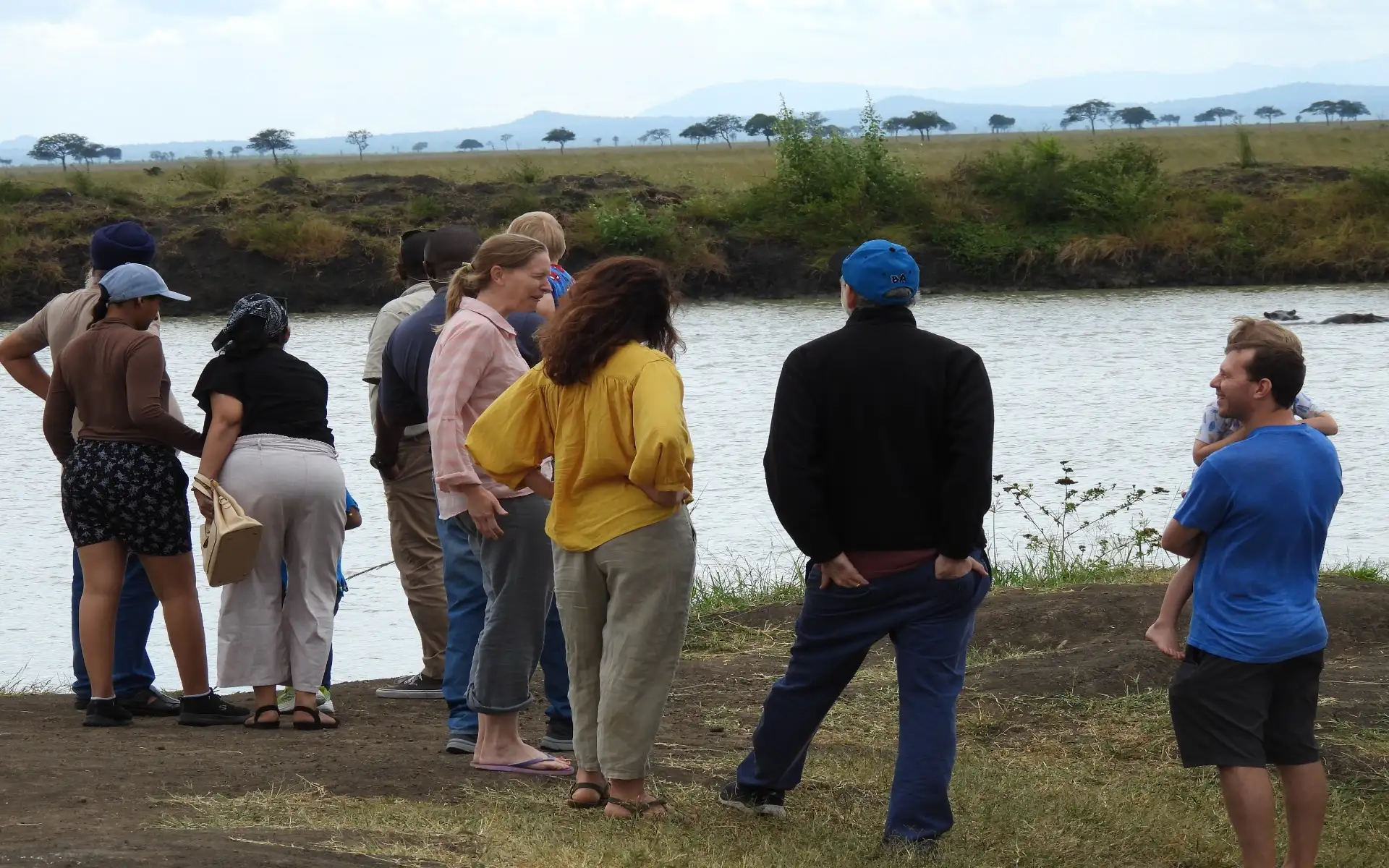
- Avoid black and dark navy. Tsetse flies are genuinely drawn to dark, high-contrast colors, and they're common in Tarangire, parts of the Serengeti, and around the Ngorongoro Crater rim. A bite is painful more than dangerous, but it's easy enough to avoid just by leaving the black and navy at home.
- Avoid bright colors and pure white. Bright colors can startle wildlife, especially birds, and white shows dust within an hour of putting it on.
- Wear khaki, olive, sand, stone, or light brown. These blend into the bush, and on a practical level, they hide dust and dirt well on multi-day trips where laundry is limited.
- Skip camouflage print entirely. This is the part most guides leave out: in Tanzania, camouflage-patterned clothing is reserved for police and military, and tourists can technically have it confiscated at customs. It doesn't help you blend in any better than plain khaki anyway, so there's no real reason to risk it.
What's the Weather Actually Like? (By Season and By Park)
Tanzania's safari circuit covers low, hot savannah and cool, high-altitude crater rims, sometimes on the same day. A lot of guides settle for "it's warm, pack layers," which misses the differences that actually change what you should bring.
What's the Weather Actually Like? (By Season and By Park)
Season | Months | What to expect | Pack for it |
|---|---|---|---|
Dry season (peak) | Late June to October | Little to no rain, cool to cold mornings (10 to 13°C / 50 to 55°F), hot afternoons (28 to 32°C / 82 to 90°F), dusty | A warm layer for dawn drives, breathable clothes for midday, fabrics that handle dust well |
Short rains | November to December | Brief afternoon showers, humid, green landscape, warmer nights | A light rain jacket, quick-dry fabrics |
Calving season | Late January to February | Hot and mostly dry, the best window for the wildebeest calving in the southern Serengeti and Ndutu | Sun protection first, but still pack a light layer for dawn |
Long rains | March to May | The heaviest, most consistent rain, some roads get difficult, lodges are quieter | A waterproof jacket, quick-dry everything, closed shoes rather than sandals |
Altitude matters more than people expect. The Ngorongoro Crater rim sits at roughly 2,300m (7,500ft), and the lodges up there can be genuinely cold at night and at dawn, noticeably more than Tarangire or Lake Manyara at the same time of year. If your itinerary touches the Crater rim, bring a proper warm layer no matter what season you're travelling in.
The Complete Safari Clothing List
Core clothing (any season)
- 4 to 5 t-shirts or short-sleeve tops (breathable cotton, linen, or moisture-wicking synthetic)
- 2 to 3 long-sleeved shirts for sun and mosquito protection. You'll reach for these more than you'd think
- 1 to 2 pairs of convertibles (zip-off) trousers, plus a pair of shorts
- A fleece, soft-shell jacket, or warm hoodie for dawn game drives
- A lightweight rain jacket or packable poncho, useful even in the dry season
- Underwear and socks for each day, plus a couple of spares
- Sleepwear
- A swimsuit, for lodge pools and for the Indian Ocean if you're adding Zanzibar
- Comfortable closed walking shoes. Trainers or light hiking shoes are enough unless you're doing a dedicated walking safari
- Sandals or flip-flops for downtime at camp
- A wide-brimmed hat with a chin strap, since open vehicles get windy
- Sunglasses with UV protection
Fabric cheat sheet
| Good for | Skip if | |
|---|---|---|---|
Quick-dry synthetic (nylon/polyester blends) | Multi-day trips with limited laundry, walking safaris | You run hot and dislike the feel of synthetics | |
Merino wool | Layering. Warm when it's cold, breathable when it's warm, and resists odor | Budget is tight, since merino tends to cost more | |
Cotton and linen | Comfort and breathability in the heat | Long walking safaris, since it's slow to dry once sweaty or rained on | |
UPF-rated sun shirts | High-altitude crater rim, midday game drives |
If you're doing a walking safari
Vehicle safaris don't ask much of your footwear, but a guided walking safari (common in Ngorongoro's highlands, or as an add-on activity) changes things a bit:
- Ankle-supportive closed shoes or light hiking boots, ideally already broken in rather than worn for the first time on the trip
- Long trousers instead of shorts, because of grass seeds, thorny scrub, and insects
- Tall socks
- A daypack with a water bladder or bottle
If you're adding Kilimanjaro
Climbing gear is really its own category, separate from safari clothing. Thermal base layers, a down jacket, a waterproof shell, and proper trekking boots are essential. It's best to treat this as its own packing list rather than trying to stretch your safari wardrobe to cover it.
If you're adding Zanzibar
Beach resorts are casual. Swimwear, sundresses, and shorts are all fine there. But away from the resorts, in Stone Town or in local villages, Zanzibar is a predominantly Muslim island, and modest dress is expected and appreciated:
- Shoulders and knees covered, for both men and women, when walking through Stone Town or villages
- Knee-length shorts or trousers for men, and knee-length or longer skirts and dresses, or capri-length trousers, for women
- A light scarf or sarong is genuinely useful. It works as a cover-up in town, doubles as a beach towel, and can serve as a headscarf for mosque visits
For kids
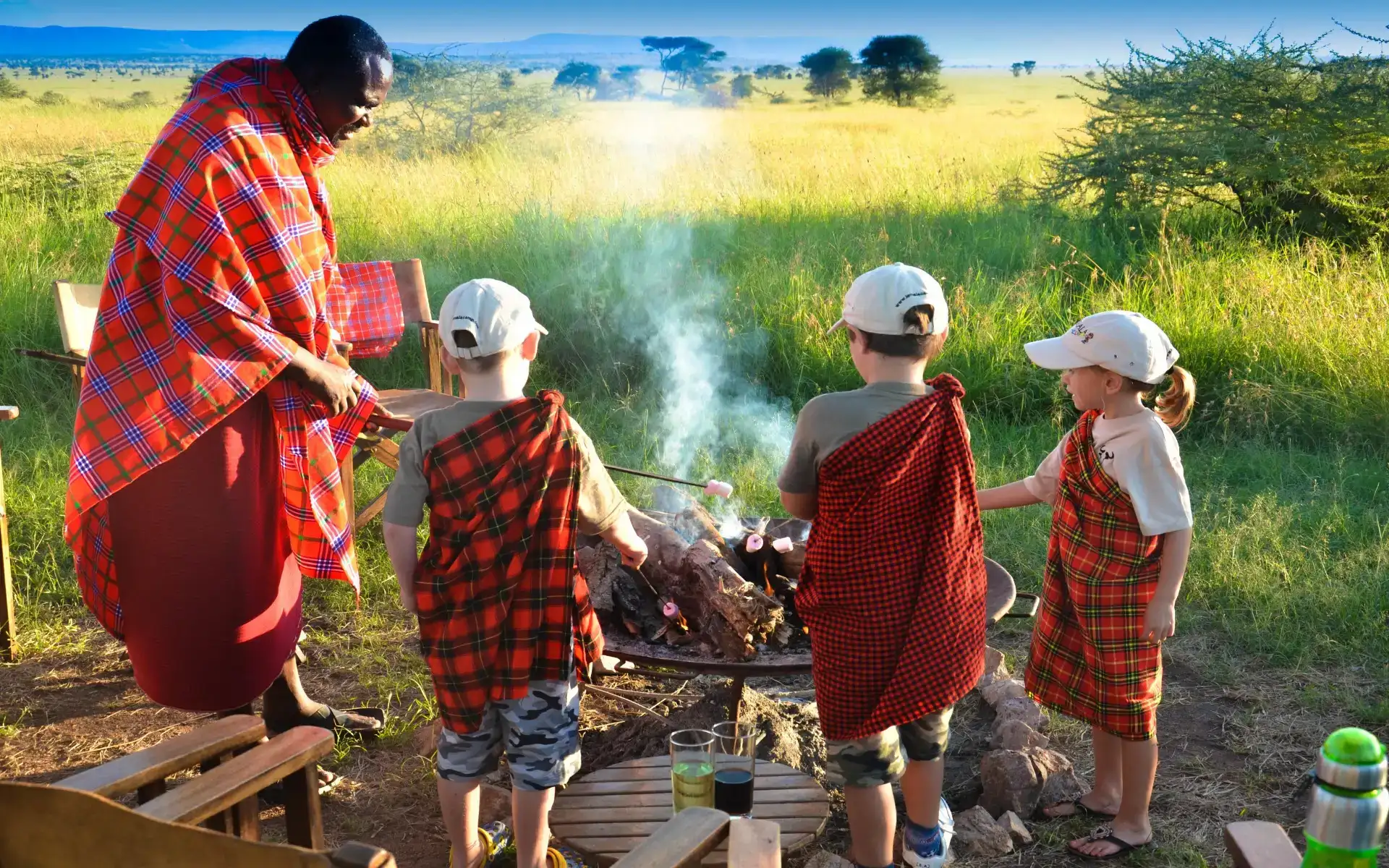
The same categories as adults, just scaled down, with two additions: a couple of extra full changes of clothes, since kids get dirtier faster, and a brightly colored item or two just for downtime at camp. The neutral-colors rule matters on game drives, not in the lodge courtyard.
What Not to Bring
- Camouflage print. As covered above, it can be confiscated at Tanzanian customs.
- All-black or all-navy outfits. Basically, tsetse fly bait.
- Heavy hiking boots, unless you're doing a multi-day walking safari or Kilimanjaro. They're overkill for vehicle-based game drives and eat into your luggage weight.
- A full suitcase of "just in case" outfits. Most camps and lodges offer next-day laundry for a small fee, so a 4 to 5 day rotation of clothing comfortably covers a two-week trip.
- Strong perfume or scented toiletries. They can attract insects and, on walking safaris, can alert wildlife to your presence.
Luggage: The 15kg Rule Most Guides Don't Mention
If your itinerary includes any internal flights between parks, which is common on combined northern and southern circuit trips, or safari-plus-Zanzibar itineraries, light aircraft carriers typically cap baggage at 15kg (33lbs) per person, including hand luggage, and they usually require a soft-sided duffel bag instead of a rigid suitcase, since hard cases don't fit the small aircraft holds. It's worth checking this against your specific itinerary well before you pack, because it directly affects how much clothing actually makes sense to bring. Plan for a 4- to 5-day rotation and lean on laundry service rather than trying to pack for every single day.
Search Blog
Recent Articles
Zanzibar Travel Guide 2026: The Complete Guide
Sep 01, 2026

Ready for an Adventure?
Book your dream safari tour today and experience the wild like never before.
View Tours