

Discover Africa
Climb Rwenzori
Forget Kilimanjaro's dusty trails — Rwenzori hides bogs, glaciers, and alien plants on the way to one of Africa's toughest summits.
Climb the Rwenzori Mountains: Routes, Prices and Margherita Peak
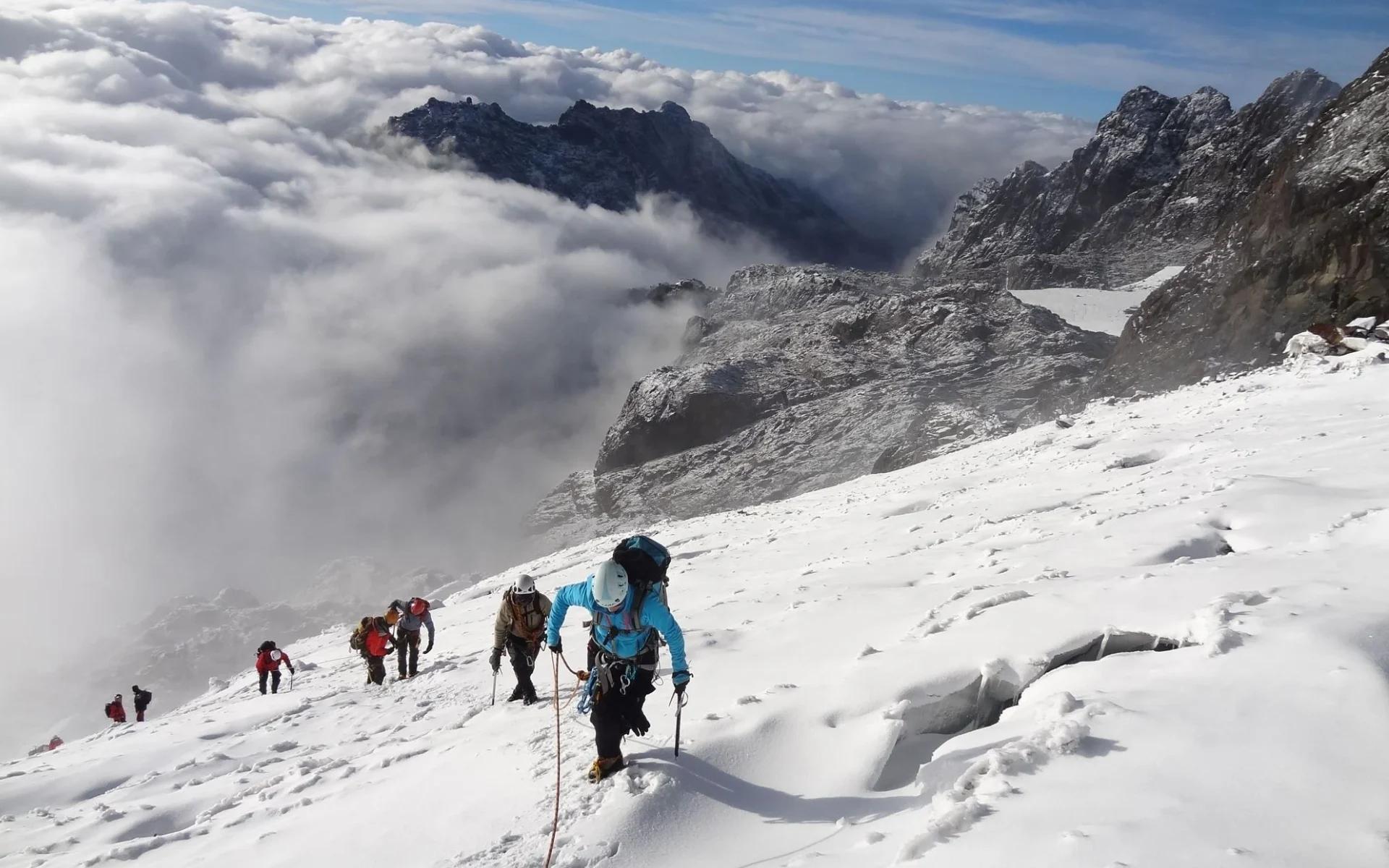
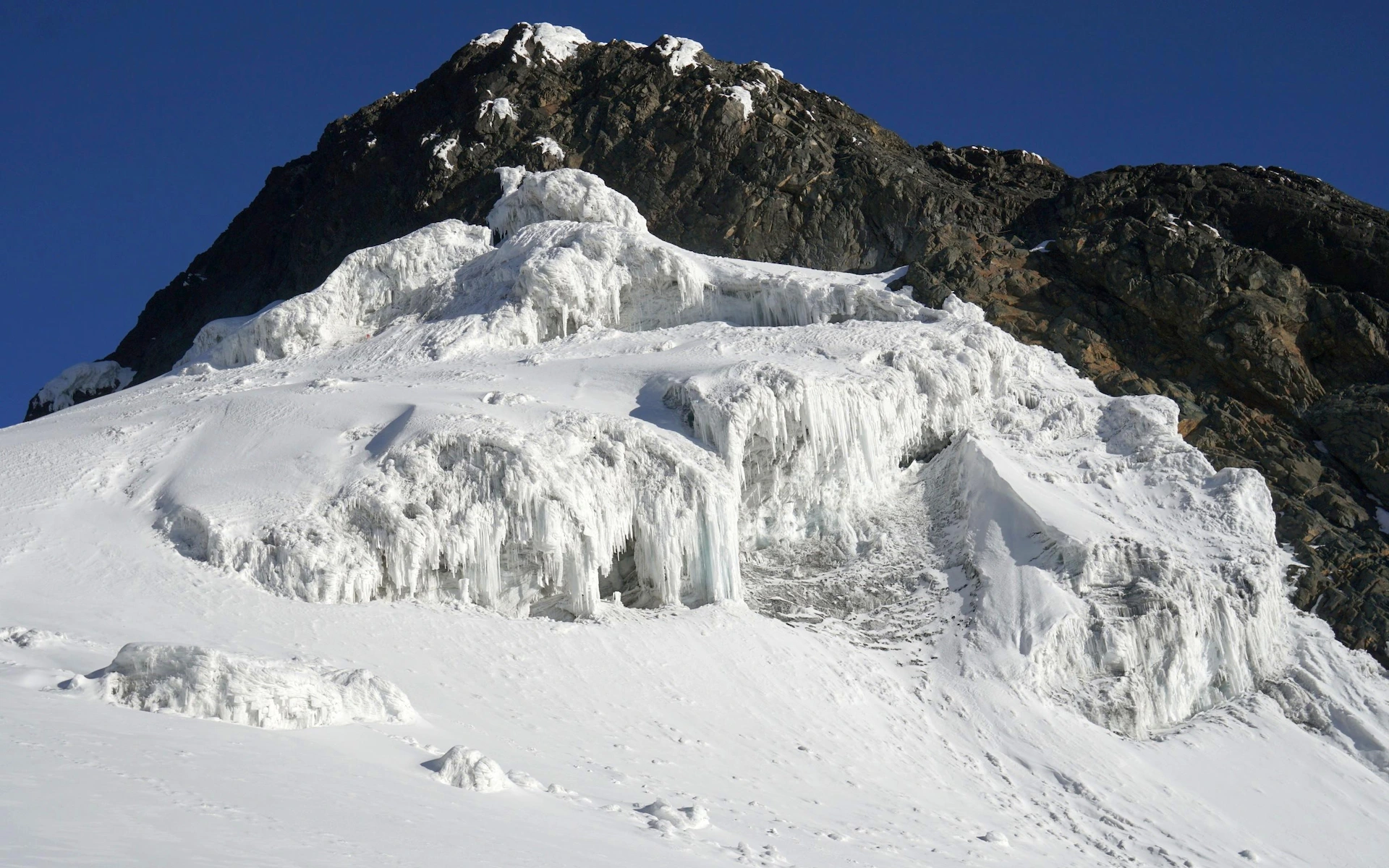
The Rwenzori Mountains, the "Mountains of the Moon", rise on the Uganda–Democratic Republic of Congo border and hold Africa's third highest summit, Margherita Peak on Mount Stanley, at 5,109 m (16,762 ft). Unlike Kilimanjaro, Rwenzori is not a volcano and not a walk up. It is a block uplifted range of rainforest, bamboo, bogs, lakes and glaciers, and reaching the top means long muddy days, high huts and a glacier summit day with crampons and a fixed ladder.
Because the routes are longer than most East African peaks, you have more time to acclimatize. Because few people come here compared with Kilimanjaro, the trails are quiet. Jairos Adventure runs two Rwenzori treks to Margherita Peak, the Central Circuit and the Bukurungu Trail, each limited to 13 climbers, from $2,130 per person.
Rwenzori at a glance
- Summit: Margherita Peak, Mount Stanley, 5,109 m / 16,762 ft
- Location: Rwenzori Mountains National Park, western Uganda, on the border with the DR Congo; a UNESCO World Heritage Site since 1994
- Our routes: Central Circuit and Bukurungu Trail
- Duration: 10 days on both of our treks; on the Bukurungu Trail that is two hotel nights before the trek, 7 trekking days and the return to Entebbe
- Accommodation: Bukurungu: full-board hotels in Entebbe (ViaVia), near the park (Bwiranda Hotel) and after the trek (Kaswa Farm Lodge), and six mountain camps (Kasanzi, Kambeho, Mughuli, Bigo, Irene Lakes, Bujuku); half board on the last day.
- Difficulty: strenuous; glacier and rock sections on summit day
- Group size: maximum 13 climbers
- Required: licensed guides arranged through the approved Rwenzori guiding services
- Best months: late December to February and late June to early September
Price: from $2,130 per person
Why climb Rwenzori with Jairos Adventure
- Small groups. Solo travellers are welcome, start dates are flexible when availability permits, and groups are limited to 13 people
- Small groups. Solo travellers are welcome, start dates are flexible when availability permits, and groups are limited to 13 people
- Clear pricing. Each tour page lists what is included, so you can compare quotes like for like.
- Full board throughout. Both 10-day itineraries have 7 trekking days, all meals on the mountain and in the hotels, and two hotel nights before the trek so you start rested.
- Time to acclimatize. Our 10-day Bukurungu itinerary has 7 trekking days, full board throughout, and hotel nights before and after the trek so you start and finish rested.
Local guides, local benefit. Guide and porter fees support the communities around the park.
- Climb, then explore. Add a Uganda safari, gorilla trekking or Queen Elizabeth National Park after the descent, or combine with Kilimanjaro or Mount Meru in Tanzania.
Rwenzori routes and prices
Choose your route below. Each tour page has the full day-by-day itinerary.
Route | Days | Price (per person) | Best for |
|---|---|---|---|
Central Circuit | 10 | $2,340 | The classic, best-established route it offers huts as accomodation |
Bukurungu Trail | 10 | $2,130 | A quieter, newer wilderness route it offers camping |
Rwenzori & Mountain Trekking itinerary
Choose your route and start your summit ascent with our expert mountain guides.
Showingtooftours
Route:
Finding the best tours for you...
10 Days
10-Days Rwenzori Trek to Margherita Peak via the Bukurungu Trail
Discover an extraordinary 10 days trek through the legendary Rwenzori Mountains, following the spect...
Max 6
From
$
2,130
/ person
10 Days
10-days trek to Margherita peak via the Central Circuit Trail
Rwenzori Mountains Trek to Margherita Peak via the Central Circuit TrailDiscover an unforgettable ad...
Max 6
From
$
2,340
/ person
No tours match your filters
Try adjusting the filters or reset them to see all available tours.
Central Circuit
The oldest and most established route to Margherita Peak. It starts near Nyakalengija and Mihunga gate, climbs through forest and bamboo to Nyabitaba, John Matte, Bujuku and the Elena hut area, crosses the Stanley plateau glacier on summit day, then loops back past Lake Kitandara and Freshfield Pass between Mount Stanley and Mount Baker. Expect the notorious Bigo bog on the way. Many operators sell this route in about 7 days; ours is 10 days: two hotel nights in Entebbe and near the park, 7 trekking days from Nyakalengija (1,615 m), a hotel night in Fort Portal and the drive back to Entebbe. The huts are Nyabitaba (2,651 m), John Matte (3,505 m), Bujuku (3,962 m), Elena (4,541 m), Kitandara (about 4,430 m) and Guy Yeoman (3,261 m). Summit day is Day 7, from Elena to Margherita Peak and on to Kitandara. Day 9 is a 7 to 8 hour descent to Mihunga gate, then a transfer to Fort Portal.
Bukurungu Trail
The newer third route, opened in partnership between WWF and the Uganda Wildlife Authority. It starts at Kasanzi gate near Omukorukumi village. You camp at Kasanzi (2,310 m), Kambeho (3,600 m), Mughuli (3,750 m), Bigo (3,442 m, after passing Lake Bukurungu at 4,091 m) and Irene Lakes (4,495 m). Summit day starts around 4:30 am from Irene Lakes to Margherita Peak (5,109 m), then you descend to Bujuku camp on the Central Circuit. Day 9 is a 7 to 8 hour walk out past John Matte and Nyabitaba to Mihunga gate, then a transfer to Fort Portal. It has fewer trekkers, more wilderness and a tougher approach. Operators usually quote it at 8 to 10 days.

How many days do you need to climb Rwenzori?
The shortest summit itineraries run about 5 to 7 days, but they are for very fit, experienced mountaineers. Most operators quote 7 to 8 days for the Central Circuit, Kilembe and Bukurungu routes, and 9 to 10 days for a slower schedule with spare days. Both of our 10-day itineraries have 7 trekking days, two hotel nights before the trek, a hotel night in Fort Portal after it, and the drive back to Entebbe on Day 10.
How hard is it to climb Rwenzori?
Rwenzori is strenuous and in some ways harder than Kilimanjaro, even though it is lower. The reasons are mud, wet weather and the technical summit day, not extreme altitude.
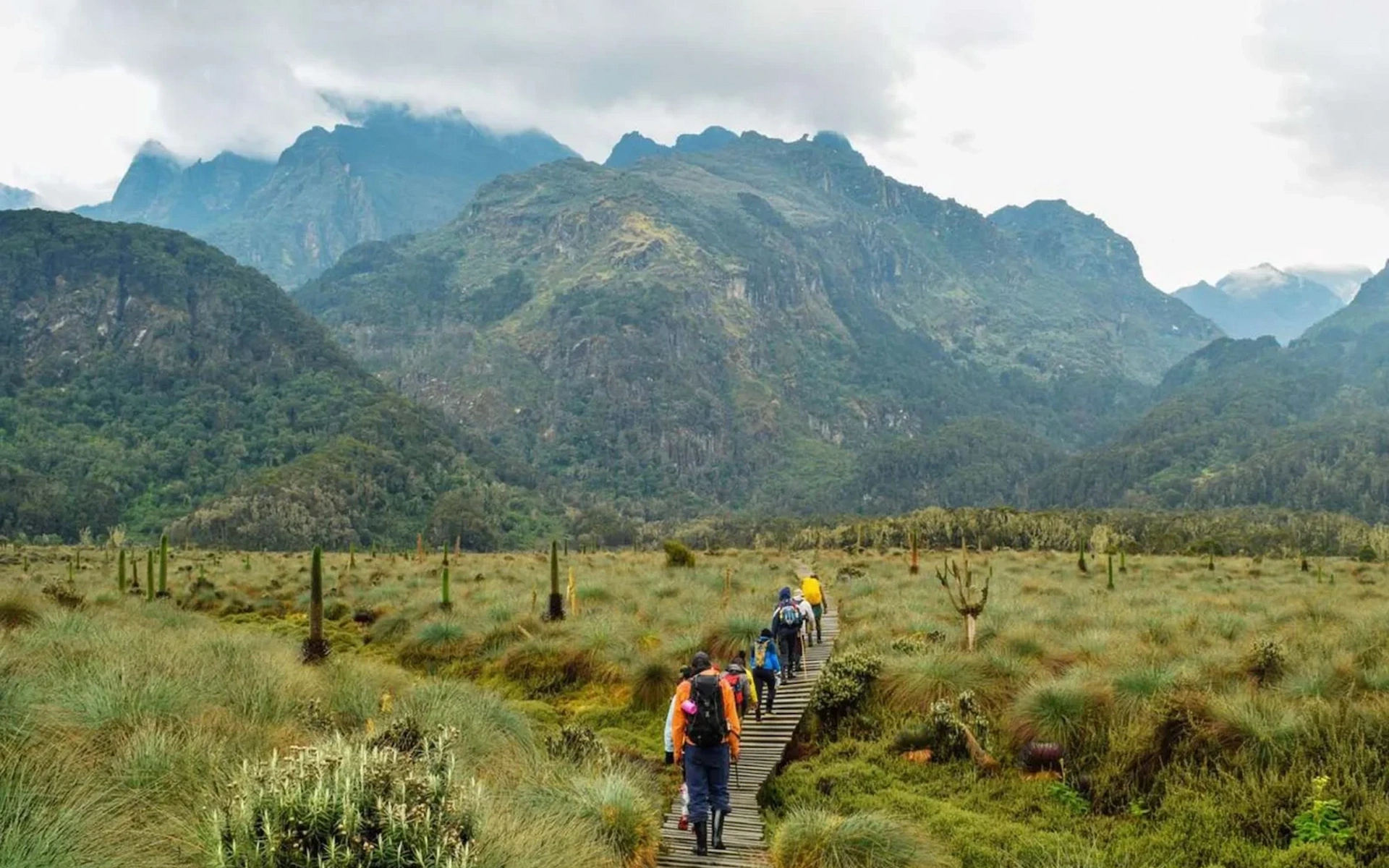
- Mud and bogs. Long sections through forest, bamboo and bog, with slippery roots and wet boulders.
- Mud and bogs. Long sections through forest, bamboo and bog, with slippery roots and wet boulders.
- Weather. It is one of Africa's wettest ranges. Expect rain, mist, wind and cold on any month of the year.
- Long days. Most trekking days run roughly 4 to 7 hours, over rough, pathless terrain.
- Summit day. From the high huts, the climb to Margherita Peak crosses rock slabs, a flat glacier, a fixed ladder and steeper snow and ice before a rocky summit tower. Your Central Circuit itinerary quotes about 4 to 5 hours up and 2 to 3 hours back to Elena hut, then a further descent to Kitandara camp, about 8 hours in total; other operators quote 5 to 7 hours up. Expect a very early start and a long day.
- Technical level. Margherita Peak requires crampons, ropes and glacier travel. Operators disagree on how much experience you need: some say none, with training given on the mountain, while others ask for real mountaineering experience. We say this plainly: you do not need to be an expert, but you do need prior multi day trekking experience, good fitness, comfort with heights and exposure, and a willingness to learn rope and crampon basics from your guides.
Glaciers on the range are shrinking, and conditions change from year to year, so your guides may adjust the route or decide that the ice is unsafe on the day.
We suggest 10 to 12 weeks of preparation: hill walking with a loaded pack on consecutive days, stair or incline training, and, if you can, a practice trek in wet conditions. See a doctor before booking if you have heart, lung or blood pressure concerns.
Rwenzori vs Kilimanjaro: which is right for you?
Detail | Rwenzori (Margherita Peak) | Kilimanjaro (Uhuru Peak) |
|---|---|---|
Summit | 5,109 m | 5,895 m |
Technical | Glacier, ladder and rock on summit day | Non-technical trek |
Typical duration | 7 to 10 days | 5 to 9 days |
Crowds | Very quiet | Busy on popular routes |
Terrain | Mud, bogs, rainforest, alpine | Rainforest, moorland, alpine desert |
Best for | Experienced trekkers wanting a wilder challenge | First time high altitude trekkers |
If this is your first high mountain, climb Kilimanjaro first. If you have done Kilimanjaro or Mount Meru and want something wilder, Rwenzori is the natural next step. Many of our climbers combine Meru, Kilimanjaro and Rwenzori in one trip.
Rwenzori weather and vegetation zones
The trek climbs through several vegetation belts, each with its own climate. The altitudes below are approximate and differ slightly between sources.
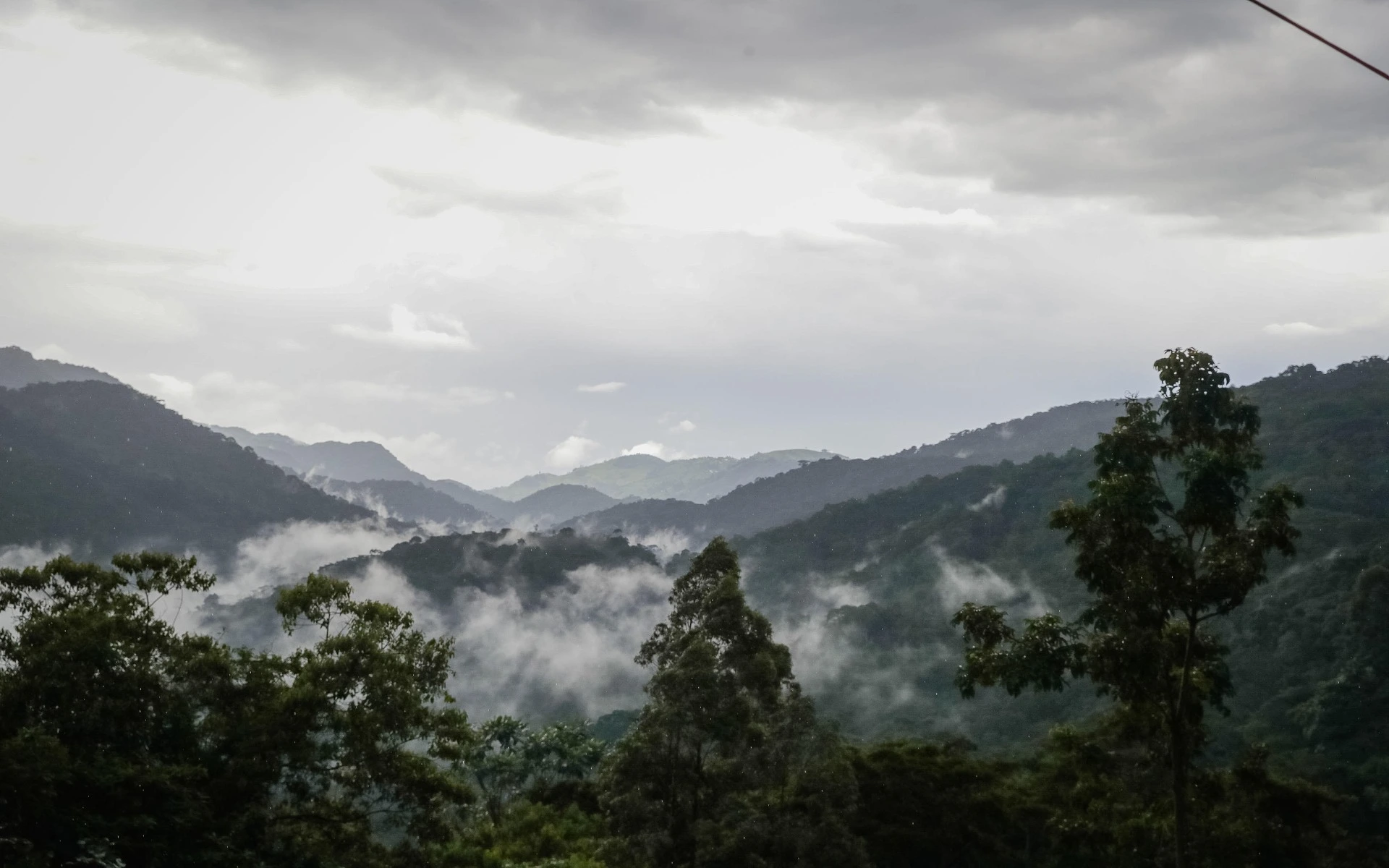
- Montane forest (to about 2,600 m): warm and humid, 15 to 20°C.
- Bamboo (about 2,600 to 3,000 m): cooler, damp, steep paths.
- Heather and giant heather (about 3,000 to 3,800 m): mossy, misty, 10 to 15°C by day, around 2 to 6°C at night.
- Afro-alpine moorland (about 3,800 to 4,500 m): giant lobelias and groundsels, bogs and lakes, often below freezing at night.
- Rocky and glacial zone (above about 4,500 m): rock, snow and ice. Summit-day temperatures can drop to around –10°C, with wind chill lower
Good to know: Rwenzori is renowned for rain. Even in the dry seasons, expect some damp or misty days.
Best time to climb Rwenzori
The driest windows are late December to the end of February and late June to early September. The wetter periods are roughly March to May and September to December, although the pattern is less predictable than it used to be.
- Late December to February: relatively stable, with mild days and cold nights. Quieter than the June to August window.
- Late June to early September: the other dry season and the more popular time.
- March to May and September to November: possible, but expect heavier rain, deeper mud and more cloud.
Altitude, glaciers and safety
- Every trek is led by licensed guides, and Uganda Wildlife Authority rules apply in the park.
- Altitude sickness is possible above about 3,500 m. Headache, nausea, dizziness, poor sleep and loss of appetite are common warning signs. The primary response to worsening symptoms is descent.
- There is no medical facility inside the park and no medication is issued on the trail. Bring your own first aid kit and any personal medication.
- A slow pace and enough days at altitude are the most effective ways to reduce risk.
-
Travel insurance covering high-altitude trekking to at least 5,100 m, emergency evacuation and medical care is required.
-
Travel insurance covering high-altitude trekking to at least 5,100 m, emergency evacuation and medical care is required.
If conditions on the glacier are unsafe, your guide may decide not to continue. Safety comes before the summit.
What's included and what's not
Included:
- All Taxes/VAT
-
Accommodation as per the itinerary: hotels in Entebbe, near the park and after the trek, plus mountain camps, all full board, with half board on the last day
-
Accommodation as per the itinerary: hotels in Entebbe, near the park and after the trek, plus mountain camps, all full board, with half board on the last day
- Airport transfers and group transport between Entebbe, the park and Fort Portal
- 1 sleeping bag
- Leggings up to the knee (gaiters)
- Rain jacket and rain-proof trousers
- Walking sticks
- First aid kit
- Water purification tablets
Not Included:
- International flights from home back to home
-
Travel and medical insurance
-
Travel and medical insurance
- Additional accommodation before and at the end of the tour
-
Personal items, souvenirs and visa
-
Personal items, souvenirs and visa
-
Tips
-
Tips
What to pack for Rwenzori
You walk from warm, wet forest to freezing glacier, so you need waterproofs and warm layers.
- Full waterproof jacket and trousers
-
Gaiters (or waterproof boots that suit the bogs)
-
Gaiters (or waterproof boots that suit the bogs)
- Sturdy, broken-in waterproof boots that can take crampons
-
Warm insulated layers, thermal base layers, hat, gloves and buff for summit day
-
Warm insulated layers, thermal base layers, hat, gloves and buff for summit day
-
Sleeping bag rated for sub-zero temperatures
-
Sleeping bag rated for sub-zero temperatures
- Trekking poles
-
Headlamp with spare batteries
-
Headlamp with spare batteries
- Dry bags to keep everything inside your pack dry
-
Sunscreen, lip balm, snow glasses or sunglasses, a sun hat and personal medication
-
Sunscreen, lip balm, snow glasses or sunglasses, a sun hat and personal medication
- High-energy snacks
Also bring: woollen socks, trekking trousers, handkerchiefs or a buff, a small daypack for lunch, water, rain gear and camera, a duffel bag for the porter to carry, binoculars, a photocopy of your passport including the visa page, and a basic medical kit (elastic bandage, plasters, stomach and headache medicine, water purification tablets, vitamin C and lip ointment). Ask your doctor about altitude medication before you travel.
Getting to the Rwenzori Mountains
Most trekkers fly into Entebbe (EBB), then travel west to Kasese, the nearest town to the park. The road journey from Kampala takes roughly 6 to 8 hours; scheduled and charter flights from Entebbe to Kasese are also available. Trails start from the Nyakalengija area near Kasese (Central Circuit) or from Omukorukumi (Bukurungu). You are met at Entebbe International Airport and transferred to ViaVia Guesthouse. On Day 2 you drive from Entebbe via Fort Portal to the park, and on Day 10 you drive from Fort Portal back to Entebbe, with transfers included.
Combine Rwenzori with a safari
Add a Uganda safari after the descent: gorilla trekking in Bwindi, wildlife in Queen Elizabeth National Park or chimpanzee tracking. Or combine with Kilimanjaro, Mount Meru, a Tanzania safari or Zanzibar.
Ready to climb Rwenzori?
Tell us your preferred dates and group size, and we'll help you choose the right route.
Frequently Asked Questions
How long does it take to climb Rwenzori?
Both of our treks take 10 days in total: two hotel nights before the trek, 7 trekking days to Mihunga gate, a hotel night in Fort Portal and the drive back to Entebbe on Day 10. Summit day on Margherita Peak is Day 7 on the Central Circuit and Day 8 on the Bukurungu Trail.
Is Rwenzori harder than Kilimanjaro?
In many ways, yes. Kilimanjaro is higher (5,895 m against 5,109 m) but it is a non-technical trek. Rwenzori has mud, bogs, frequent rain and a summit day over glacier, rock and a fixed ladder, with crampons and ropes. It suits trekkers who already have some multi-day experience.
Do I need climbing experience to summit Margherita Peak?
You do not need to be an expert, but you do need prior multi-day trekking experience, good fitness, comfort with heights and exposure, and a willingness to learn rope and crampon basics from your guides.
What is the best season to climb Rwenzori?
The driest windows are late December to February and late June to early September. It can rain or turn misty in any month, and March to May and September to November are the wettest.
What are the main Rwenzori routes?
There are three main routes: the Central Circuit, the Kilembe Trail and the Bukurungu Trail. We operate the Central Circuit and the Bukurungu Trail.
How much does it cost to climb Rwenzori?
Our treks start from $2,130 per person (Bukurungu) and $2,340 per person (Central Circuit). See each tour page for what is included.