
When most people think of Africa, they picture wide open savannas, scorching desert heat, and lush tropical forests. Snow feels like it belongs somewhere else entirely. But here is the thing — it does snow in Africa, and far more often than most people realize.
From the towering glaciers of Mount Kilimanjaro in Tanzania to the ski slopes of Morocco’s Atlas Mountains, snow is a very real part of this continent’s story. Several African peaks carry ice and snow year-round, sitting right on the equator a fact that still surprises even seasoned travelers.
In this guide, we will walk you through every major snowy destination in Africa, explain why snow forms at such low latitudes, and tell you the best time to see it for yourself including from the summit of Kilimanjaro, which our team at Jairos Adventure has been guiding climbers to since 2017.
The short answer is yes, absolutely. Many people assume that because Africa lies mostly in the tropics, it must be warm everywhere all year round. But Africa is a continent of remarkable geographical diversity it stretches from the Mediterranean coast in the north all the way to cold southern latitudes, and includes mountains that reach nearly 6,000 metres above sea level.
At high enough altitudes, temperatures drop well below freezing no matter how close you are to the equator. That is the secret behind Africa’s snow. It is not about the latitude it is about the height.
Three specific conditions across the continent make snowfall not just possible but regular:
• High-altitude equatorial mountains Kilimanjaro, Mount Kenya, and the Rwenzori range trap moisture and stay freezing at their peaks year-round.
• North African winter cold Morocco’s Atlas Mountains sit at latitudes similar to southern Spain and receive heavy snowfall every winter season.
• Southern Africa’s winter Lesotho and the Drakensberg mountains in South Africa experience cold, reliable winters with regular snowfall between May and September.
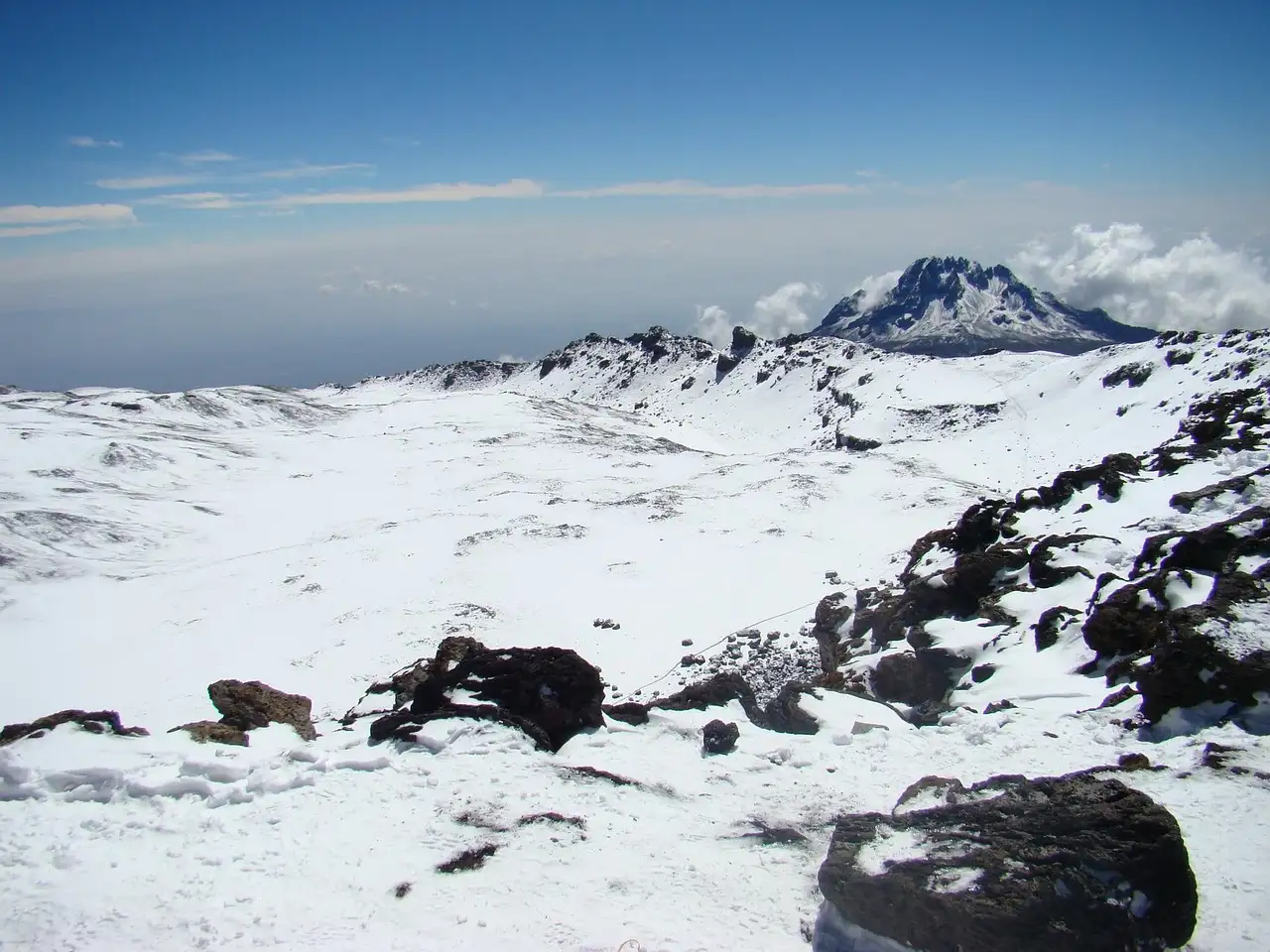
Here is a full overview of every major snow destination in Africa, with the details you need to know about when and why snow appears there.
1. Mount Kilimanjaro, Tanzania — Africa’s Most Iconic Snow
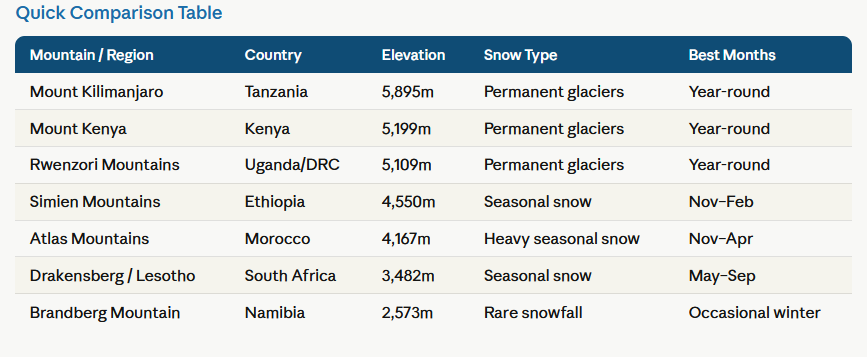
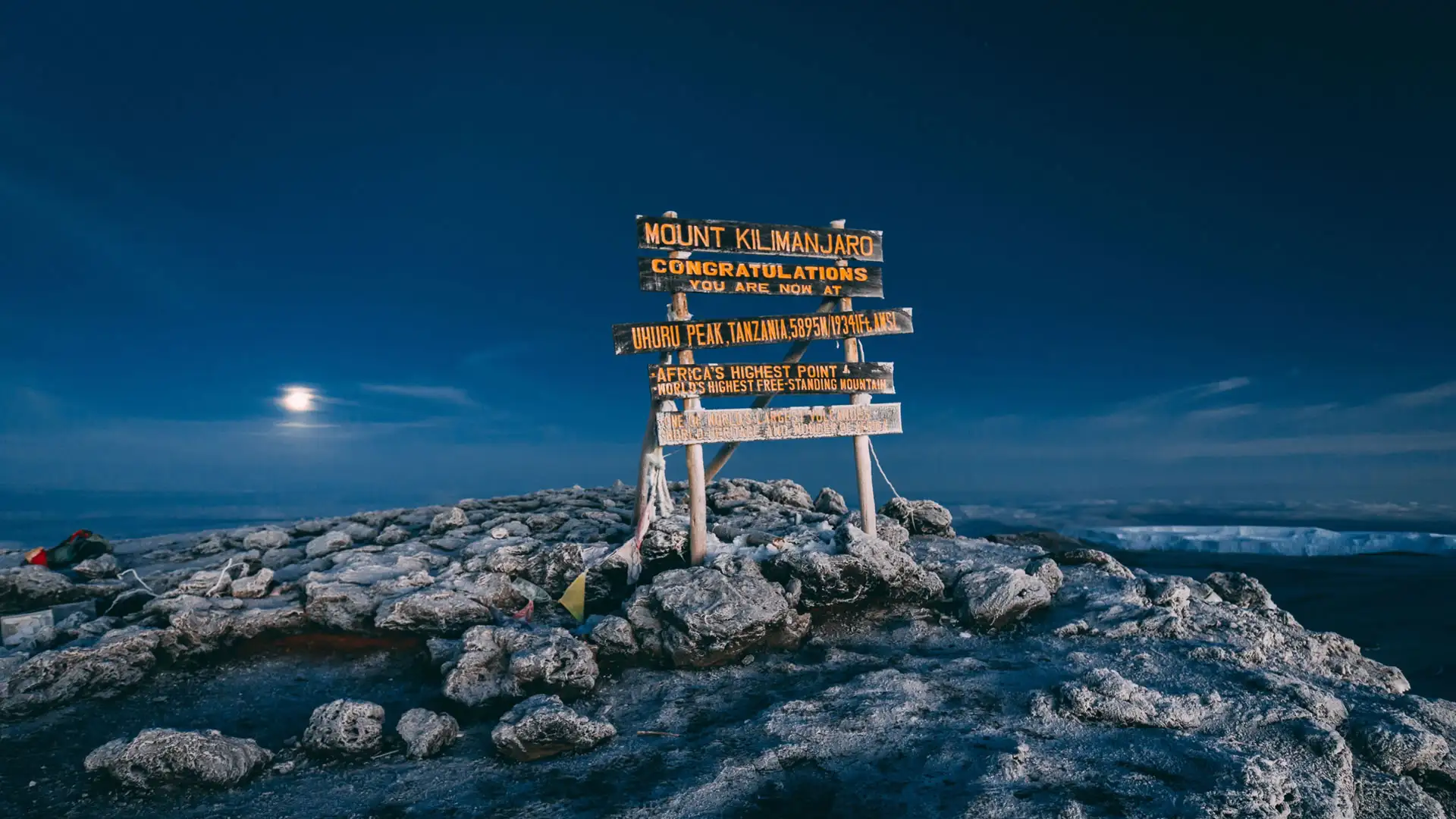
Standing at 5,895 metres, Mount Kilimanjaro is Africa’s highest mountain and the world’s tallest free-standing volcano. Its glacier-capped summit sits just 340 kilometres south of the equator, making it one of the most remarkable geographical features on Earth.
Kilimanjaro has four major ice fields near its peak: the Northern Icefield (the largest remaining glacier), the Southern Icefield (home to the famous Kersten Glacier), the Eastern Icefield (featuring the Rebmann Glacier), and the Furtwangler Glacier inside the crater near Uhuru Peak.
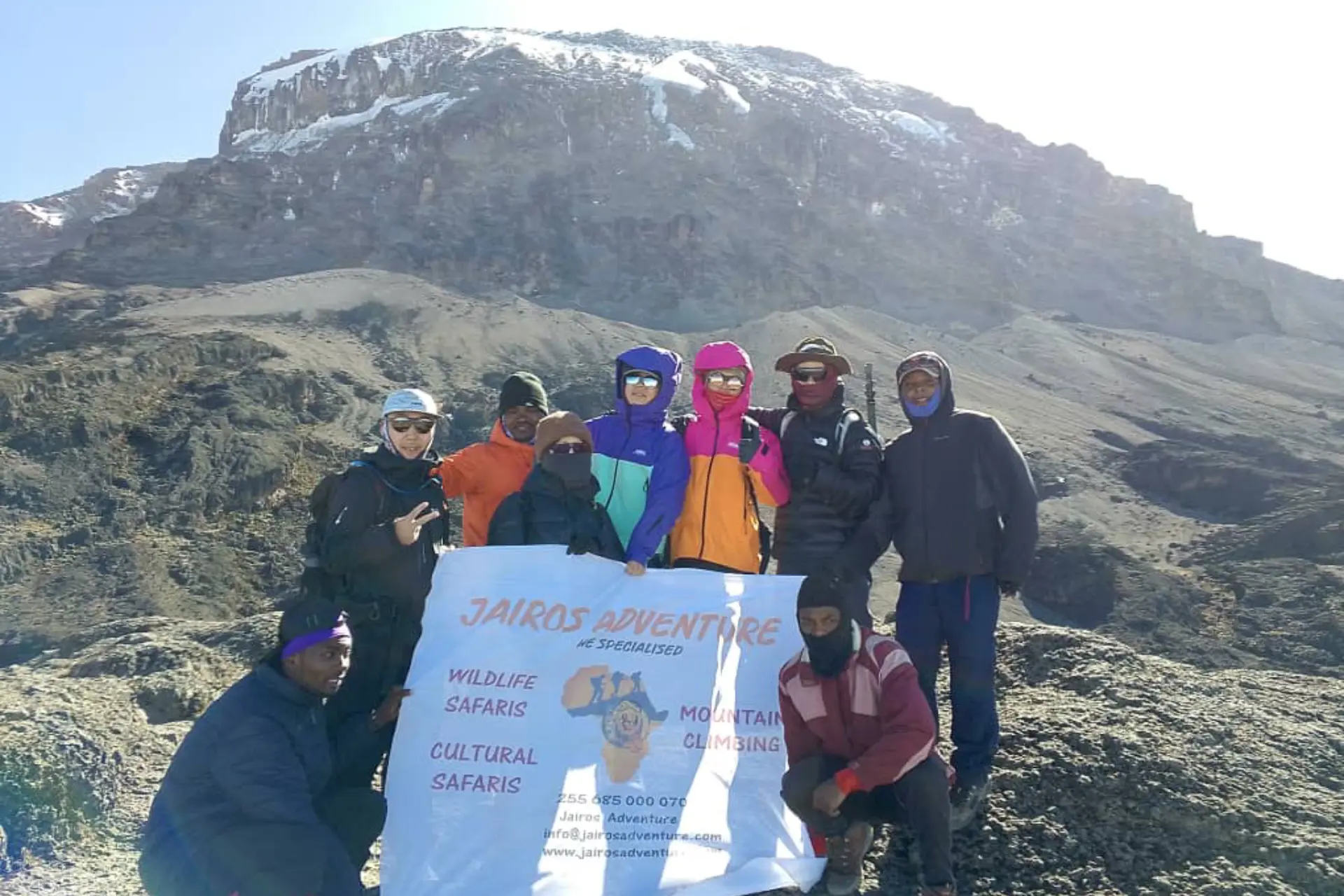
Climbers who summit Kilimanjaro walk across snow and ice in the final hours of their ascent. Summit temperatures at night can plunge to -20 degrees Celsius — a sharp contrast to the tropical warmth at the mountain’s base. One important thing worth knowing: since 1912, Kilimanjaro has lost more than 80 percent of its ice. Scientists warn the remaining glaciers could disappear within decades, making a climb today a chance to witness something truly irreplaceable.
2. Mount Kenya, Kenya Glaciers on the Equator
Mount Kenya reaches 5,199 metres and sits almost exactly on the equator, making its permanent glaciers one of the most geographically astonishing sights on the planet. Like Kilimanjaro, its ice fields exist because the altitude is high enough to maintain freezing temperatures despite the equatorial warmth below. It is a UNESCO World Heritage Site and a popular destination for trekkers and technical climbers alike.
3. The Rwenzori Mountains, Uganda and DRC The Mountains of the Moon
Known for centuries as the “Mountains of the Moon,” the Rwenzori range straddles the border between Uganda and the Democratic Republic of Congo. Its highest peak, Margherita Peak on Mount Stanley, reaches 5,109 metres and carries some of the most extensive permanent glaciers in Africa. The Rwenzoris are famous for their mystical, mist-wrapped landscapes and extraordinary biodiversity.
4. The Simien Mountains, Ethiopia Seasonal Snow in the Highlands
The Simien Mountains in northern Ethiopia include Ras Dejen, the country’s highest peak at 4,550 metres. Snow here is seasonal rather than permanent, falling regularly between November and February when cold fronts move through. The range is also a UNESCO World Heritage Site and home to the endangered Gelada baboon and Ethiopian wolf.
5. The Atlas Mountains, Morocco Skiing in Africa
The Atlas Mountains are probably the most accessible snow destination in Africa. The High Atlas range includes Jebel Toubkal at 4,167 metres, the highest peak in North Africa, which receives heavy snowfall from November through April. Morocco even has a ski resort Oukaimeden just 75 kilometres from Marrakech. It sits at around 2,600 metres and offers skiing and snowboarding during the winter season, making it the easiest place in Africa to enjoy a proper snow experience without any technical climbing.
6. The Drakensberg Mountains and Lesotho Winter Snow in Southern Africa
The Drakensberg range, stretching across South Africa and into Lesotho, sees reliable winter snowfall between May and September. Lesotho — a small mountain kingdom completely surrounded by South Africa — is sometimes called the “Kingdom in the Sky” because so much of it sits above 2,000 metres. It even has its own ski resort, Afriski, at 3,222 metres. On the South African side, the Royal Natal National Park and the Central Drakensberg area see snow most winters, creating dramatically beautiful alpine scenery.
7. Brandberg Mountain, Namibia — Rare Desert Snow
Brandberg Mountain in Namibia, the country’s highest peak at 2,573 metres, sits in the middle of the Namib Desert. Snow here is extremely rare — perhaps once every few years — but it does happen, creating a genuinely surreal scene of snow on desert rock. When it does fall, it rarely lasts more than a few hours.
This is one of the questions we hear most often from travellers planning a Kilimanjaro climb. The answer comes down to a simple but powerful relationship between altitude and temperature.
As you climb higher into the atmosphere, the air gets thinner and loses its ability to hold heat. On average, temperature drops by about 6.5 degrees Celsius for every 1,000 metres of altitude you gain this is called the environmental lapse rate.
At Kilimanjaro’s summit, you are 5,895 metres above sea level. Even if the base temperature down in the tropical lowlands is a warm 25 degrees Celsius, the summit is theoretically around 38 degrees cooler putting it well below zero. Add wind chill and low solar absorption at altitude, and nighttime temperatures can hit -20 degrees Celsius or colder. The same physics applies to Mount Kenya, the Rwenzoris, and every other high-altitude African peak. The equator matters far less than the elevation.
Is there snow in Africa in December?
Yes. December falls within the wet season on Kilimanjaro and Mount Kenya, which means fresh snowfall is common at high altitudes. In Morocco, the Atlas Mountains are well into their winter snow season by December, and skiing at Oukaimeden typically gets underway around this time.
Is there snow in Africa in July?
Yes, especially in southern Africa. July is mid-winter in the southern hemisphere, making it the best month for snow in Lesotho, the Drakensberg mountains, and the highlands of South Africa. On Kilimanjaro, July is actually a dry season month less fresh snowfall, but the permanent glaciers remain. It is also one of the best months to climb because the skies are clear and stable.
Can you see snow in Africa without climbing a mountain?
Yes, in a few ways. Morocco’s Oukaimeden ski resort is accessible by road, no climbing required. The Afriski resort in Lesotho is also driveable. In South Africa, you can reach viewpoints overlooking snow-covered Drakensberg peaks in winter without any technical effort. For Kilimanjaro, you do need to hike but it is well within reach for most healthy adults with proper preparation, and the experience is unlike anything else on Earth.
Is Kilimanjaro’s snow disappearing?
Unfortunately, yes. Kilimanjaro has lost more than 80 percent of its ice since 1912, and the glaciers continue to retreat due to warming temperatures and changing precipitation patterns. Scientists believe the remaining ice could disappear within the next few decades. This makes visiting Kilimanjaro today not just an adventure it is a chance to witness something ancient and irreplaceable before it is gone.
Does it snow in Cape Town or Egypt?
Snowfall in Cape Town itself is extremely rare perhaps once a decade though the surrounding mountains do see snow in winter. In Egypt, snow is uncommon in the lowlands but does fall most winters around Saint Catherine’s Monastery in the Sinai Peninsula, which sits at around 1,600 metres. In January 2013, Cairo experienced snow for the first time in over 100 years.
The answer depends on which part of Africa you want to visit:
• Kilimanjaro, Tanzania: Permanent glaciers year-round, with the best fresh snowfall from November to May. The most popular climbing windows are January–February and June–October.
• Atlas Mountains, Morocco: Snow season runs November to April. January and February are the snowiest months, and the ski resort operates from around December to March.
• Drakensberg and Lesotho: May to September (southern hemisphere winter) is the reliable snow window, with June and July typically the snowiest months.
• Simien Mountains, Ethiopia: November to February for the best chance of seeing snow on the high peaks.
• Mount Kenya and Rwenzori: Permanent glaciers year-round, with the best trekking in January–February and July–August during drier periods.
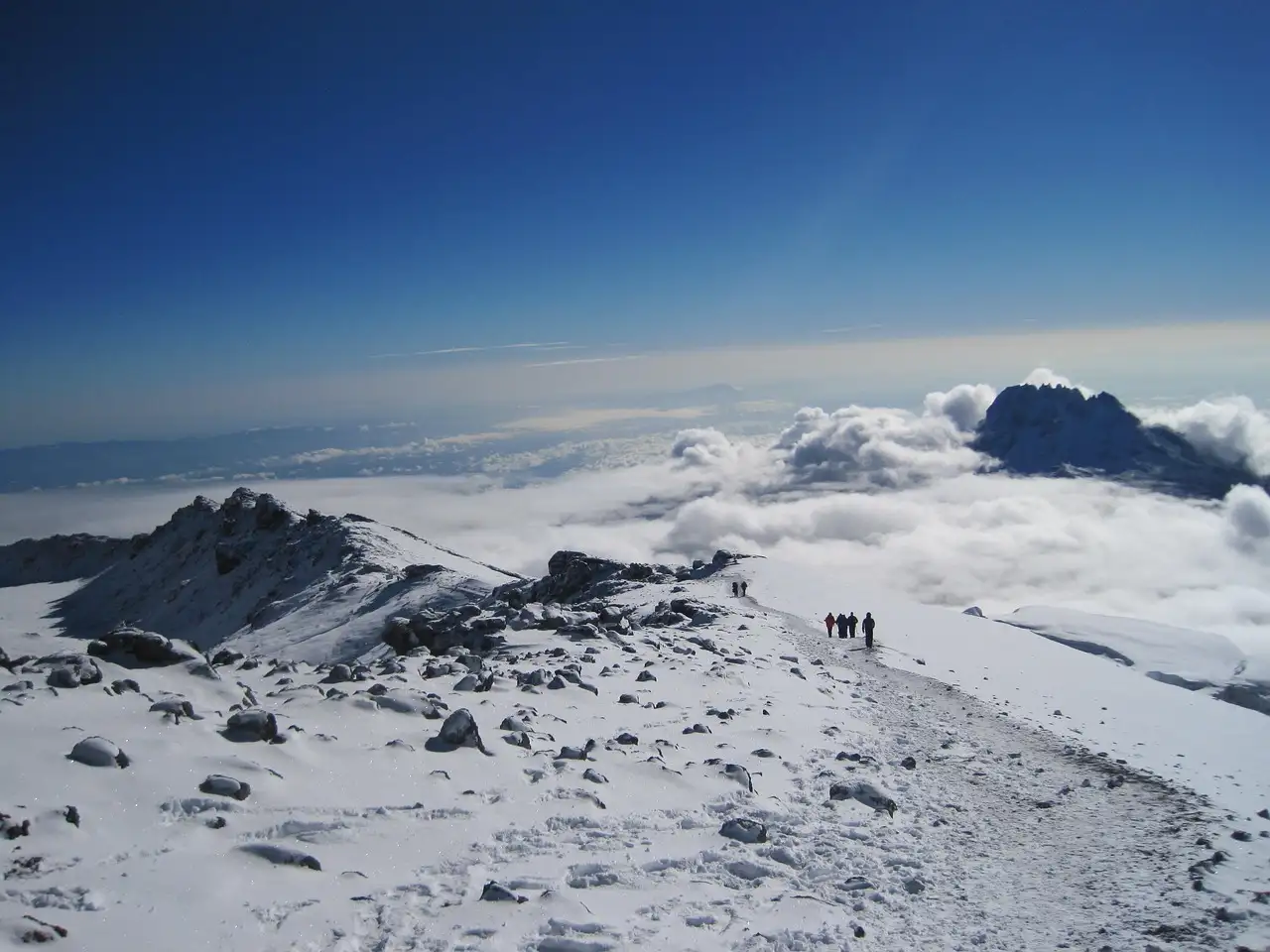
For many travellers, the most powerful way to experience snow in Africa is to stand on the roof of the continent. When you summit Mount Kilimanjaro, you are not just ticking off a bucket list you are walking across glaciers that have existed for nearly 12,000 years, witnessing one of the world’s great natural wonders up close.
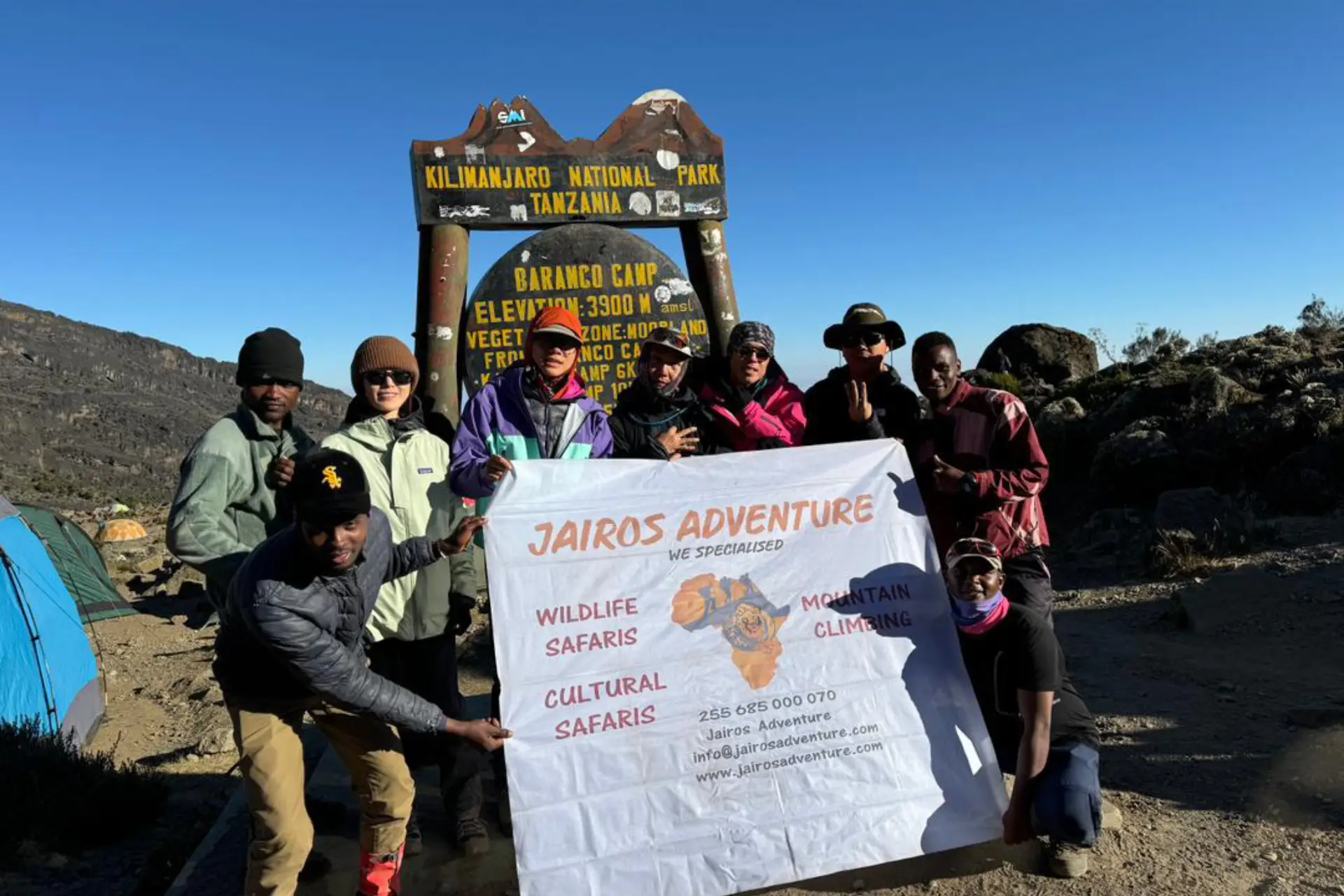
At Jairos Adventure, we have been guiding climbers from around the world to the summit since 2017. Our team of experienced local guides knows every route, every weather pattern, and every challenge Kilimanjaro can throw at you. We keep our groups small, pay our porters fairly, and put your safety above everything else.
Whether you choose the popular Machame Route, the scenic Lemosho Route, or the remote Northern Circuit, we will prepare you fully and give you the best possible chance of reaching the top and seeing those glaciers for yourself.
Explore Our Adventures gallery

Customize Your Tour
Start your journey today with an unforgettable African Safari.
Tell us what you’re looking for, and we’ll help turn your travel ideas into an unforgettable experience.