Night Game Drive: The Complete Guide to Safari After Dark

Witness nature’s greatest spectacle with a night game drive


There is a version of Africa that most safari visitors never see. It exists in the hours between sunset and dawn — a world governed by different rules, different sounds, and a cast of animals that spend their entire lives avoiding the scrutiny of daylight. A night game drive is your invitation into that world, and once you have sat in an open vehicle while a spotlight sweeps across the darkness and the amber eyes of a leopard suddenly blaze back at you from thirty meters away, no daytime safari will ever feel quite complete again.

Night game drives have grown from a niche activity offered by a handful of specialist lodges into one of the most sought-after experiences on the African continent. And for good reason: they deliver encounters with wildlife that are simply impossible to replicate during daylight hours — not because the animals hide, but because they transform. The shy, resting creatures of midday become confident, purposeful hunters under cover of darkness, and the bush comes alive with a restless energy that the heat of the day suppresses entirely.

This guide is written for anyone who is planning or considering a night game drive for the first time, as well as experienced safari travelers who want to deepen their understanding of nocturnal wildlife behavior. We cover the ecology behind why night drives are so productive, the animals most likely to be encountered, the best destinations in Africa, practical preparation, photography, safety, and everything in between.

Why the Night Changes Everything

To understand why a night game drive is so ecologically rich, it helps to think about what daylight actually means for African wildlife. For many species, particularly the smaller and medium-sized mammals, daytime is a period of risk — a time when they are most visible to aerial predators, most easily tracked by humans, and most exposed to the punishing heat of the equatorial sun. Nocturnal behavior is, for these animals, a survival strategy refined over millions of years.

Biologists estimate that between 60 and 70 percent of mammal species found in African savannahs and woodlands are either fully nocturnal or predominantly active during twilight hours. This means that a visitor who restricts their game viewing to daylight hours is, statistically speaking, missing the majority of the mammal diversity the continent has to offer. Night drives don’t just supplement a safari — they reveal a parallel world that coexists invisibly with everything you see during the day.

Even the species that are active by day undergo a fundamental behavioral shift after dark. Lions, which spend up to twenty hours resting during daylight, become alert and purposeful hunters once the temperature drops. Elephants, which graze relatively calmly in open grassland during the day, become surprisingly stealthy as they move through the bush at night, their enormous bodies almost silent against the sounds of the bush. Buffalo herds, often languid and dusty by midday, move with urgency and surprising coordination in darkness.

The sensory experience of a night drive is also categorically different from its daytime equivalent. Without the visual dominance of bright sunlight, your other senses come forward. You hear the low rasping cough of a leopard marking its territory before the spotlight finds it. You smell the heavy, musky odor of a hippo grazing near the road before you see its silhouette. You feel the temperature of the air changing as the vehicle moves from open grassland to dense riverine forest, and you become acutely aware of the sounds that define the African night — the continuous chorus of frogs, the rhythmic calling of nightjars, the distant whoop of spotted hyenas on the move.

What Exactly Is a Night Game Drive?

A night game drive is a guided wildlife excursion conducted after sunset from an open or semi-open four-wheel-drive vehicle, typically equipped with one or more powerful spotlights. The spotlights used by professional operators are usually fitted with red filters or dimmers that allow guides to illuminate animals without causing them significant distress or disrupting their natural behavior — a white beam of full intensity, pointed directly at an animal, can temporarily blind it and cause it to flee, while a softer, angled red light allows extended observation without behavioral disruption.

Most night drives depart between 6:30 and 7:30 PM, after the last light has faded from the western horizon, and run for two to three hours before returning to the lodge or camp. Some operators offer what are called “night to dawn” drives that begin after dinner and continue until first light — an extraordinarily immersive experience, though demanding in terms of stamina. Others offer early morning drives that begin well before sunrise and take advantage of the pre-dawn period when nocturnal animals are completing their nightly activity and diurnal species are just stirring.

The role of the guide on a night drive is different from their daytime counterpart, and considerably more demanding. Tracking animals in darkness requires an intimate knowledge of the landscape and the behavioral patterns of each species. Experienced guides know which termite mounds are favored by aardvarks, which waterholes hippos prefer for their nightly grazing excursions, which trees leopards use as territorial markers and which rocky outcrops are used as resting platforms. A night drive with a truly knowledgeable guide is as much a masterclass in animal behavior as it is a wildlife viewing experience.

💡 Pro Tip Where You’ll Stay

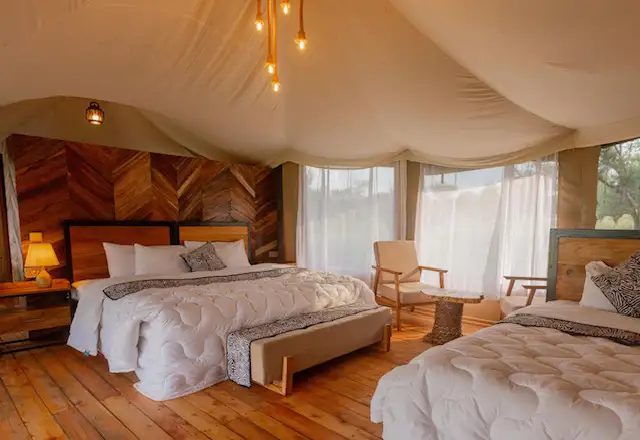
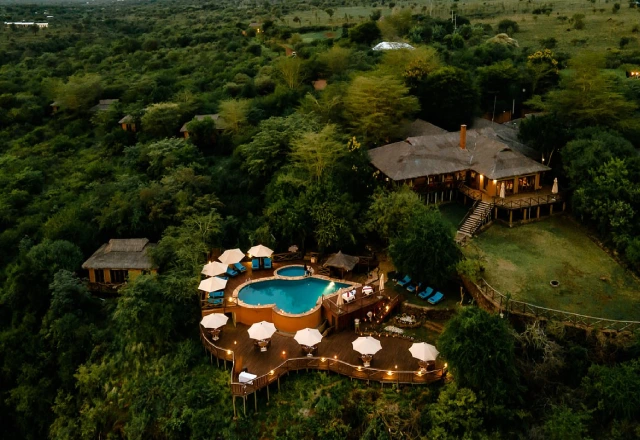
To participate in a night game drive, guests must stay at lodges that are inside the park or near the park to conduct these activities