
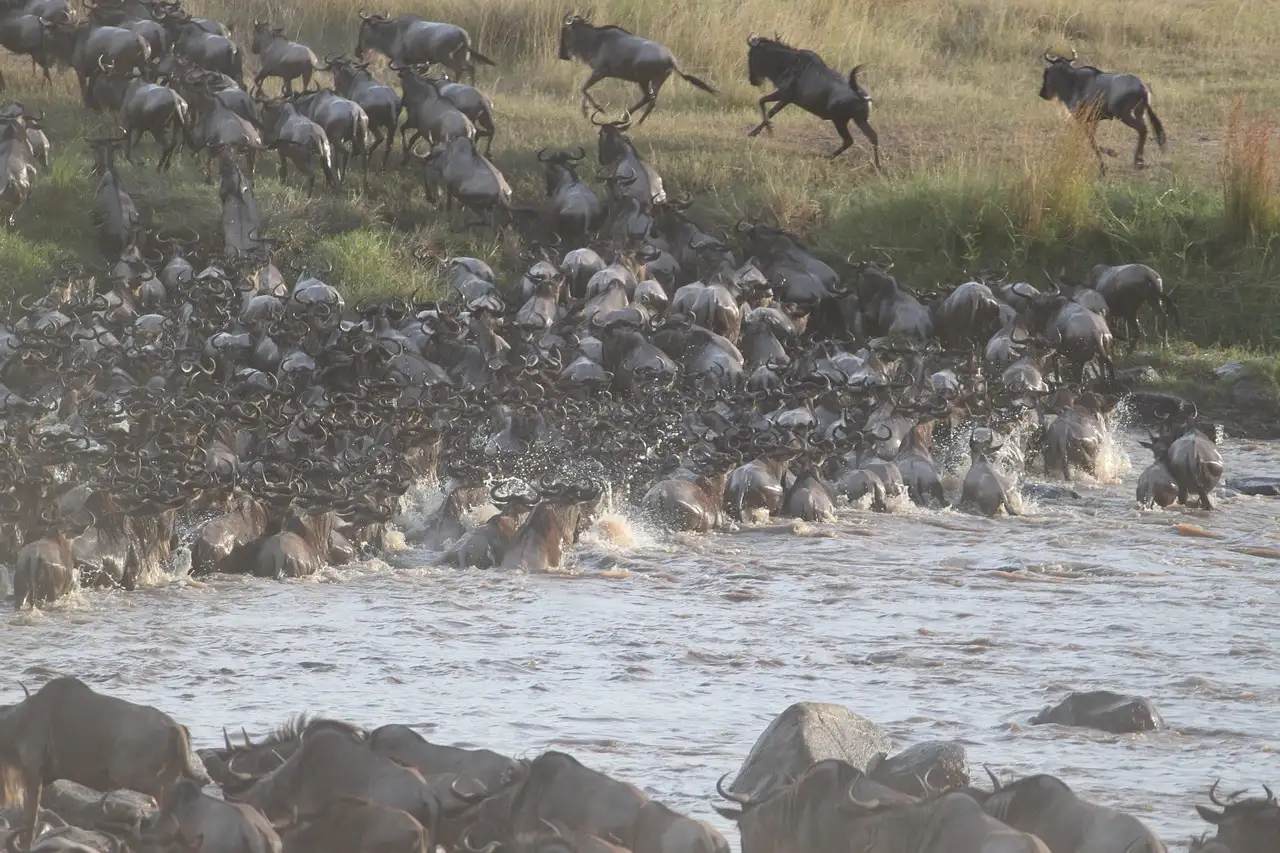
Migration in Serengeti is over 1,500,000 wildebeest, plus hundreds of thousands of zebras and gazelles, that move in a continuous loop between Tanzania’s Serengeti and Kenya’s Masai Mara, tracking fresh pastures and seasonal rains. The most dramatic spectacles include the calving season in Ndutu (southern Serengeti) and river crossings in the Grumeti and Mara systems. Timing varies by year based on rainfall, grass quality, and herd decisions—precision planning beats fixed-date assumptions
The loop typically flows from southern Serengeti (Jan–Mar) up through central and western corridors (Apr–Jun), into the northern Serengeti/Mara (Jul–Oct), and back south (Nov–Dec). River crossings on the Grumeti (usually around Jun) and Mara (usually Jul–Sep) are the high-risk chapters where currents and crocodiles test the herds, and patience pays off for observers. Live trackers and sightings confirm that each year brings surprises—early rains can trigger premature movements, and localized conditions shift herd density. Following current updates is the most reliable way to align your safari with specific events.
The Great Migration is one of Earth’s most spectacular natural phenomena, with over two million wildebeest, zebras, and gazelles moving across the Serengeti-Mara ecosystem in an endless cycle driven by rain and fresh grass. Understanding the migration’s timing helps you plan the perfect safari experience, though nature’s unpredictability means flexibility remains essential.
January–February: Calving Season in Ndutu
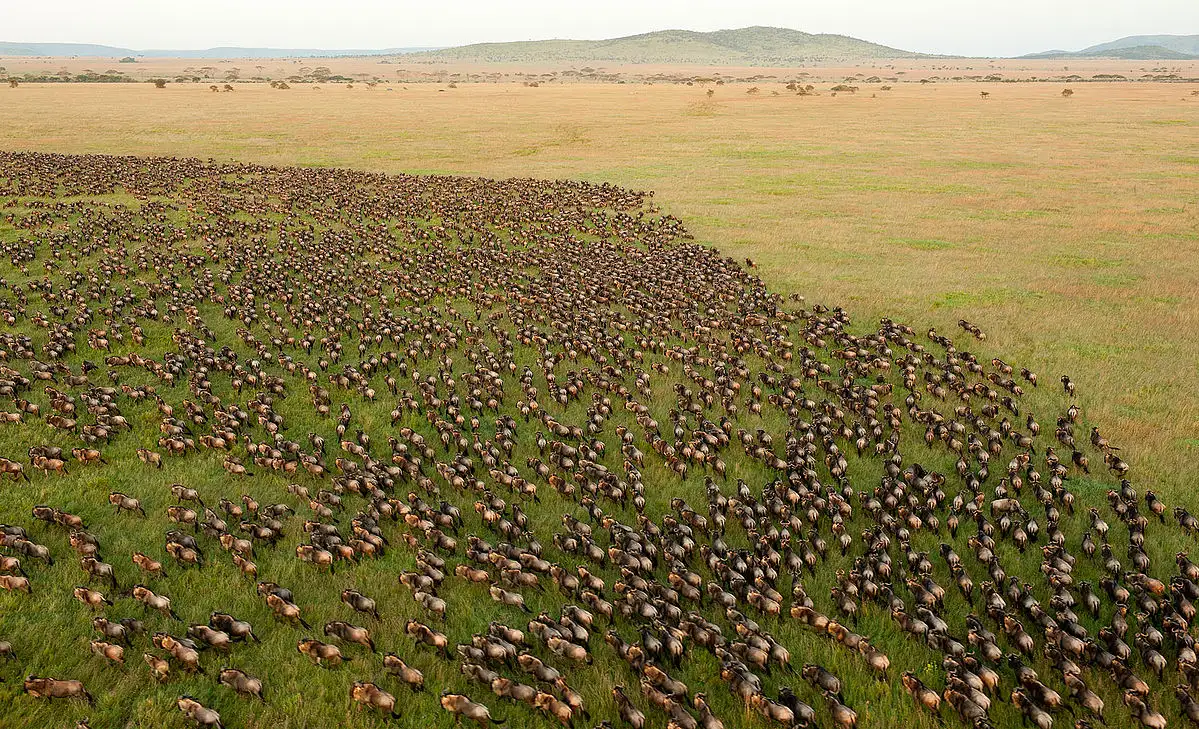
The migration year begins with the mass calving season on the nutrient-rich short-grass plains of the southern Serengeti and Ndutu area. During these weeks, approximately 400,000 to 500,000 wildebeest calves are born in a concentrated two- to three-week period, creating one of nature’s most extraordinary synchronized events. This birthing strategy overwhelms predators through sheer numbers, ensuring most newborns survive. The open landscape provides excellent visibility for both nervous herds watching for predators and safari-goers witnessing intense predator action during morning and evening hours. Basing yourself in Ndutu, Kusini, or southern Serengeti mobile camps positions you perfectly for this spectacle. However, short-grass plains can become muddy during rainy periods, so choose operators with excellent off-road capability. Calving timing varies with rain patterns, so current field reports improve your chances of witnessing peak activity.
March: Southern to Central Serengeti Transition
March marks a transitional phase as grass depletes and nursery herds with growing calves begin moving northward. This period offers unique photographic opportunities with concentrated herds creating dramatic panoramic scenes. Movement remains fluid, with herds anywhere from Ndutu and Naabi Hill to central Serengeti around Seronera, depending on rain progression and available grazing. Young calves now display increasing confidence while predator presence remains high, making March particularly exciting for wildlife enthusiasts. Positioning yourself in the southern to central Serengeti corridor allows you to intercept these movements, with Seronera serving as an excellent base. Safari planning should emphasize flexibility, as herd locations vary considerably based on seasonal conditions.
April–May: Western Corridor Build-Up
April and May bring long rains that transform the landscape into lush green expanses, drawing herds northwest toward the Western Corridor. Though this period receives less attention due to rain concerns, it offers rewarding experiences with dramatic storm clouds, lightning-lit horizons, and atmospheric conditions that photographers love. Herds spread out as abundant grass reduces grazing competition, creating different viewing dynamics than calving season’s concentrated masses. Basing yourself from Seronera to Western Corridor camps near Grumeti provides access to migration movements and excellent general game viewing. Rain can affect road conditions, so select camps with flexible game-drive routing and consider extended stays for weather-dependent scheduling. Many operators offer attractive low-season rates during these months.
June: Grumeti River Crossings
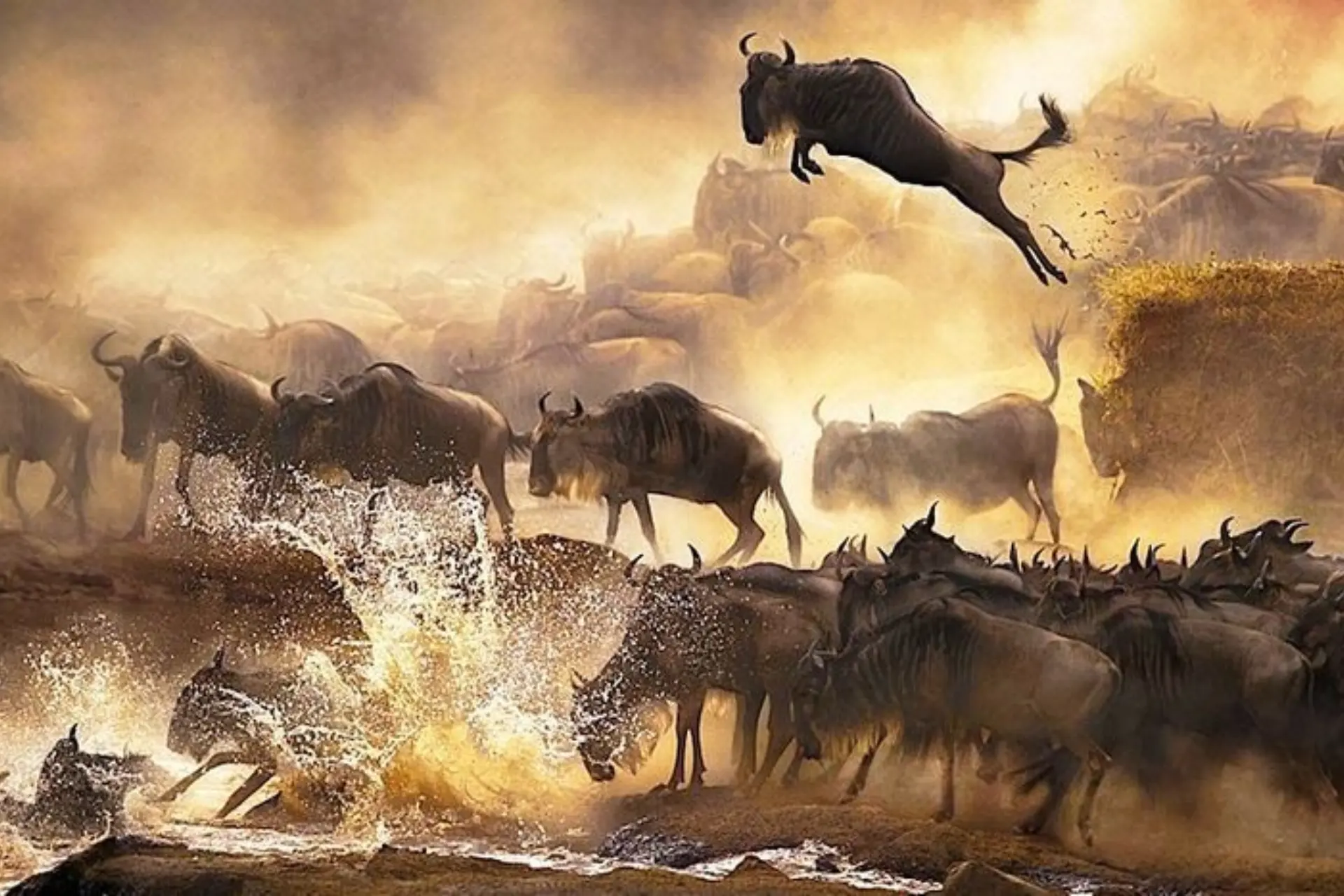
June introduces the migration‘s first major river-crossing drama as herds encounter the Grumeti River in the Western Corridor. While less famous than Mara River crossings, Grumeti offers spectacular tension as wildebeest mass on riverbanks before suddenly surging forward in collective decisions that send thousands plunging into crocodile-filled waters. Crossings occur at various points, with unpredictable timing requiring patience from safari-goers. The most successful experiences come from spending multiple consecutive days in the Western Corridor rather than brief visits. Basing yourself in Western Corridor camps or Grumeti Reserve positions you well, with guides who understand local patterns and maintain communication networks alerting them when herds gather near traditional crossing points.
July–September: Iconic Mara River Crossings
July through September represents the migration’s crescendo when vast herds reach the northern Serengeti and Masai Mara, encountering the formidable Mara River. This deeper, faster-flowing river hosts enormous Nile crocodiles that create scenes of primal intensity as thousands of animals plunge down steep banks into churning water.
Crossings occur primarily in Kogatende and Lamai regions in Tanzania and the Mara Triangle and Musiara areas in Kenya’s Masai Mara. River crossings create explosive events where tens of thousands might cross within hours, then recross days later, with August typically seeing peak activity. However, crossings remain unpredictable, with herds potentially massing for days before suddenly surging across. Successful viewing requires positioning yourself near the river with sufficient time to wait through lulls, as mornings might be calm before afternoons erupt into action. Longer stays of three to five days provide much better odds than brief visits. Book accommodations early, as prime crossing areas fill months in advance. Camps in Kogatende, Lamai, the Mara Triangle, and Musiara offer the best access.
October: Late Crossings and Northern Residency
October represents the migration’s autumn phase, with herds straddling the Tanzania-Kenya border, exploiting the last northern grass before returning south. Crossing activity continues in smaller, more sporadic events, offering intimate wildlife moments rather than overwhelming spectacles. This period attracts fewer tourists, making October excellent for travelers preferring fewer vehicles and more personalized experiences. Wildlife concentrations remain impressive with high predator activity. Photographers appreciate October’s good weather, excellent light, and opportunities for long-lens photography capturing individual animals and small group dynamics. Basing yourself in Lamai, Kogatende, or adjacent Mara zones positions you well with greater accommodation flexibility and potentially better rates than peak season.
November–December: Southbound Return Journey
November and December close the migration’s annual circle as herds return south, drawn by short rains greening the central and southern Serengeti plains. This journey lacks the concentrated drama of river crossings but offers rewards in watching massive herds flowing across grasslands, creating visible dust clouds and constant grunting vocalizations.
Herd positions depend heavily on rain patterns, which vary significantly year to year, making flexible itineraries valuable. Working with experienced operators who monitor movements helps you intercept southbound waves successfully. Base yourself initially in central Serengeti camps, potentially moving to Ndutu or southern camps as December advances. This transitional period offers unique photographic opportunities as dramatic weather creates dynamic lighting conditions, framing moving herds.
Planning Wisdom
Successfully experiencing the Great Migration requires balancing planning with tactical flexibility. Book accommodations well in advance, particularly for peak crossing season, but work with operators who can adjust itineraries based on current conditions. Build in extra days beyond what seems necessary, as river crossings don’t happen on demand.
Communicate clearly with your operator about priorities, whether crossings, calving, predator action, or simply being present with herds, as different goals suggest different timing and locations. Invest in quality guiding, as experienced guides who know the ecosystem, maintain communication networks, and understand animal behavior dramatically enhance success rates. Remember that the migration follows grass and water in an endless survival search, not a scheduled performance, and approaching your safari with patience and flexibility transforms any experience into a profound connection with one of Earth’s last great wildlife spectacles.

- Live migration trackers: Real-time maps and sightings offer current positions in Serengeti and Masai Mara, with frequent updates that reflect the day-to-day movements and weather-driven behavior.
- Recent sightings reports: Seasonal roundups highlight calving timing, early surges, and notable crossings—use them to tune your dates and camp selection. Year-to-year unpredictability means trackers are essential to avoid “just missed it” trips
If you want calving action (Jan–Feb)
- Choose: Ndutu/southern plains; two game drives daily.
- Allocate: 4–6 nights.
- Gear: Fast prime/zoom lenses for predation and low light.
If you want river crossings (Jul–Sep)
- Choose: Northern Serengeti (Lamai, Kogatende) or Mara Triangle.
- Allocate: 5–7 nights near crossing points; add buffer days.
- Mindset: Crossings are not guaranteed—patience wins. Currents and crocodiles make this the most dramatic chapter.
If you want fewer crowds
- Choose: Shoulder months (Oct, Mar).
- Allocate: 4–5 nights with flexible routing.
Camps, logistics, and timing tips
- Mobile vs. permanent camps: Mobile camps shadow the herds; permanent lodges offer comfort and fixed access. Mix both to hedge against movement.
- Vehicle strategy: Prioritize camps with skilled guiding, radios, and river proximity in Jul–Sep, and excellent off-road access in Jan–Feb.
- Book windows: River-crossing season sells out 9–12 months in advance; calving needs weather-aware flexibility.
- Ethics and safety: Keep distance at crossings; respect ranger instructions and do not pressure herds.
Explore Our Adventures gallery

Customize Your Tour
Start your journey today with an unforgettable African Safari.
Tell us what you’re looking for, and we’ll help turn your travel ideas into an unforgettable experience.