
The Ultimate Climbing Guide for Tanzania's Hidden Gem Introduction to Mount Meru
Mount Meru stands as Tanzania’s second-highest mountain and Africa’s fifth-highest peak, reaching an impressive 4,566 meters (14,980 feet) above sea level. Located in Arusha National Park in northern Tanzania, this dormant stratovolcano sits just 70 kilometers (43 miles) west of the iconic Mount Kilimanjaro. While often overshadowed by its famous neighbor, Mount Meru offers a spectacular climbing experience that combines challenging trekking with incredible wildlife encounters and breathtaking volcanic landscapes.
Why Climb Mount Meru?
The Perfect Kilimanjaro Preparation
Mount Meru serves as an exceptional acclimatization trek for climbers preparing to summit Mount Kilimanjaro. The mountain’s altitude forces your body to adapt to reduced oxygen levels, significantly increasing your success rate on Kilimanjaro. Climbers who tackle both mountains together report almost universal success on Kilimanjaro, with guides consistently noting that the acclimatization gained on Meru makes Kilimanjaro feel manageable.
Many climbers choose to explore Mount Meru for its unique challenges and stunning views. The trek offers a chance to witness the beauty of Mount Meru while gaining valuable experience for higher peaks.
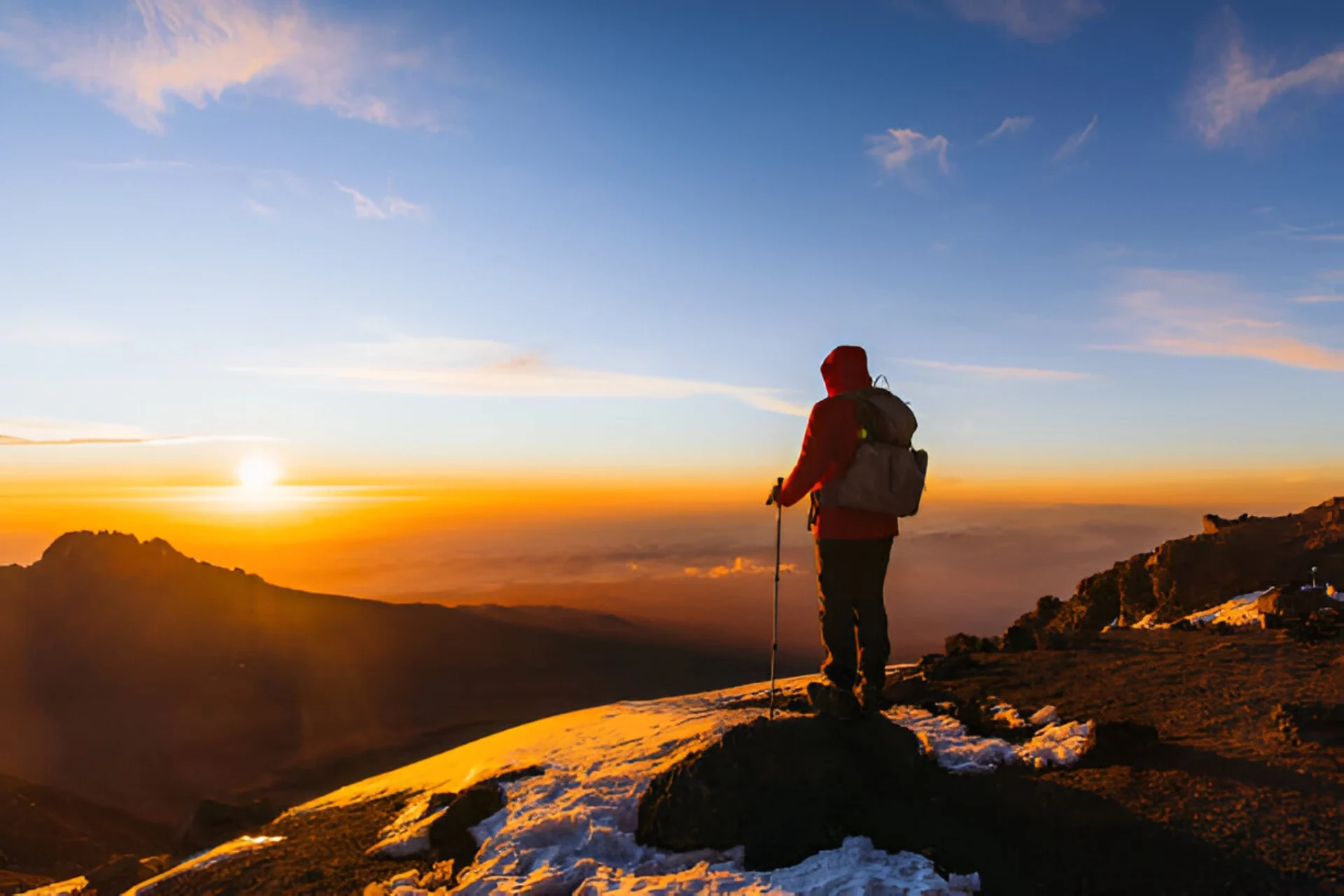
Once at the summit of mount meru, climbers are rewarded with stunning views that offer a sense of accomplishment and connection to nature.
Spectacular Wildlife Encounters
Unlike Kilimanjaro, Mount Meru’s location within Arusha National Park means you’ll encounter abundant wildlife throughout your trek. On the lower slopes, expect to see:
- Buffalo herds grazing in open grasslands
- Giraffes browsing among acacia trees
- Colobus monkeys swinging through dense forests
- Warthogs, zebras, and various antelope species
- Over 400 bird species, including turacos, trogons, and crowned eagles
- Occasional sightings of elephants, leopards, and hyenas
This wildlife presence necessitates the mandatory armed park ranger who accompanies all climbing groups for safety.
Fewer Crowds, More Wilderness
While Mount Kilimanjaro attracts thousands of climbers annually, Mount Meru remains blissfully uncrowded. This translates to a more intimate, peaceful wilderness experience where you can truly connect with nature without the constant stream of other trekking parties.
Stunning Volcanic Landscapes
Mount Meru’s dramatic horseshoe-shaped crater resulted from a massive volcanic explosion approximately 8,000 years ago that destroyed the original summit. The climb takes you through:
- Lush montane rainforests with giant fig trees
- Heather moorlands are dotted with giant lobelias
- Alpine desert zones with everlasting flowers
- The spectacular Ash Cone rising within the crater
- A thrilling knife-edge ridge walk to the summit
Mount Meru Geography and Geology
Location and Access
Mount Meru dominates the skyline above Arusha, Tanzania’s safari capital. The mountain is easily accessible from:
- Kilimanjaro International Airport (JRO): 45 minutes to 1 hour drive
- Arusha town: 1 hour drive to Momella Gate
- Moshi town: 3 hours drive to Momella Gate
Geological Features
As an active but dormant stratovolcano, Mount Meru last experienced minor volcanic activity around 1910. The mountain’s defining features include:
- Socialist Peak: The main summit at 4,566 meters
- Little Meru: A secondary peak at 3,820 meters
- The Ash Cone: A volcanic cone rising 250 meters above the crater floor
- Rhino Point: Located at 3,850 meters along the summit route
- The crater rim: A narrow, exposed ridge offering dramatic views
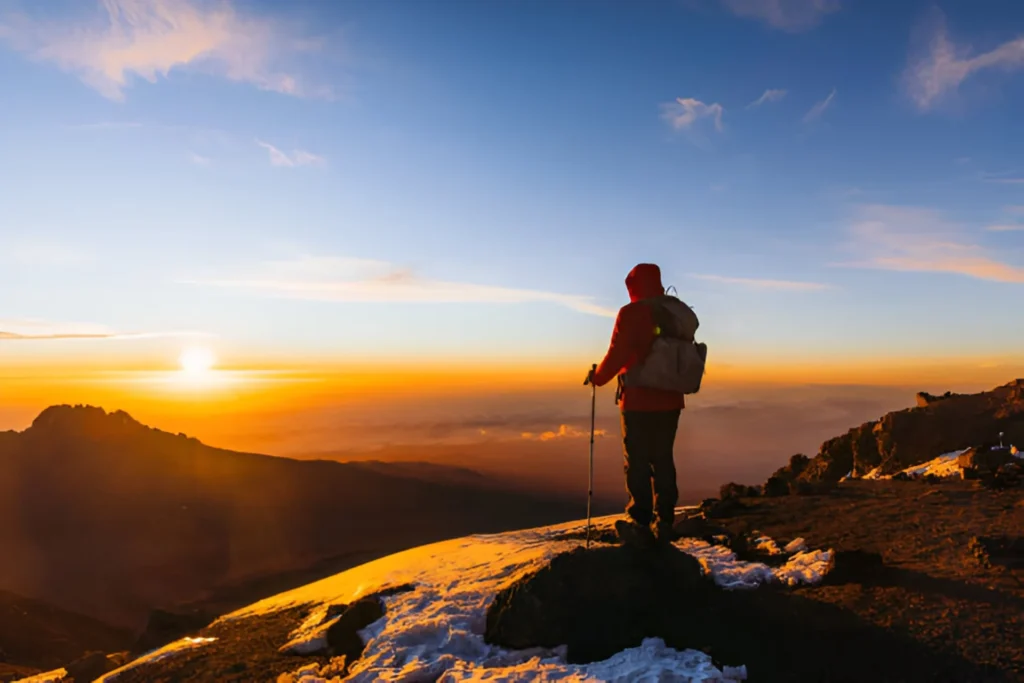
On clear days, climbers are rewarded with spectacular sunrise views over Mount Kilimanjaro’s snow-capped peak.
Every trek offers a unique perspective of mount meru, enhancing the overall experience for those keen to explore the wilderness.
The best way to prepare for Mount Kilimanjaro is by first climbing Mount Meru (4,566m), which offers a shorter but challenging trek that acclimatizes your body to altitude, builds stamina, and gives you technical practice before tackling Kilimanjaro’s 5,895m summit. Many climbers use Meru as a warm-up, spending 3–4 days on its steep ridges and diverse terrain before moving on to Kilimanjaro.
Why Mount Meru is the Perfect Preparation
- Altitude Acclimatization: At 4,566m, Meru helps your body adjust to thinner air, reducing the risk of altitude sickness on Kilimanjaro.
- Shorter Duration: The trek takes 3–4 days, compared to Kilimanjaro’s 6–9 days, making it a manageable warm-up.
- Technical Practice: Meru’s steep ascents and narrow ridges prepare you for Kilimanjaro’s final push at Uhuru Peak.
- Wildlife & Scenery: Located in Arusha National Park, Meru offers encounters with giraffes, buffalo, and monkeys, plus stunning views of Kilimanjaro itself.
Climbing Routes and Itineraries
The Momella Route
Mount Meru has only one official climbing route—the Momella Route (also called the Southern Route). This non-technical route begins at Momella Gate (1,514 meters) and follows the northern side of the crater to Socialist Peak.
4-Day Itinerary (Recommended)
The 4-day trek offers superior acclimatization and better summit success rates, typically exceeding 90-95% for well-prepared climbers.
Day 1: Momella Gate to Miriakamba Hut
- Elevation: 1,500m to 2,514m
- Distance: Approximately 10km
- Time: 4-6 hours
- Terrain: Open grassland transitioning to montane forest
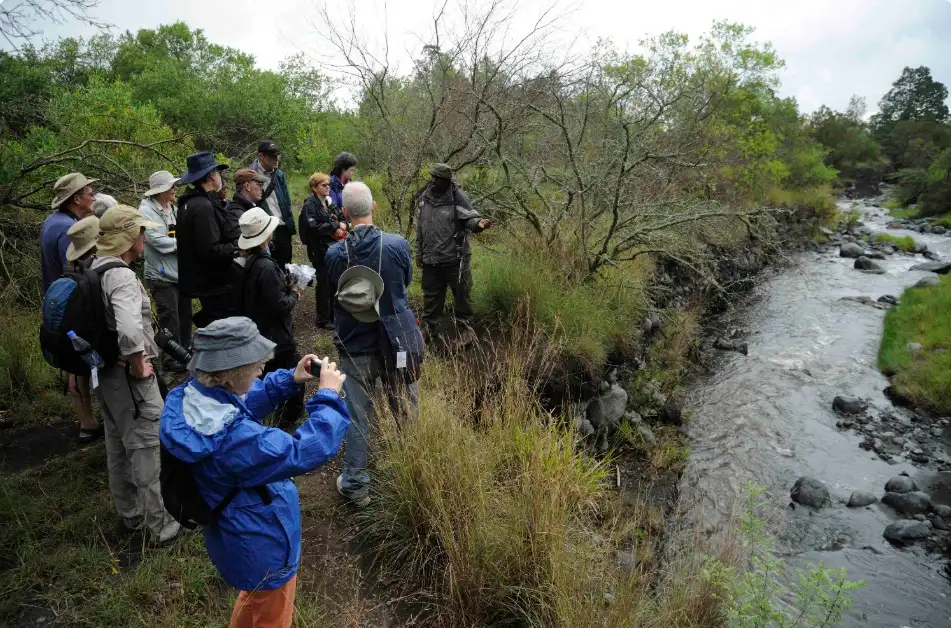
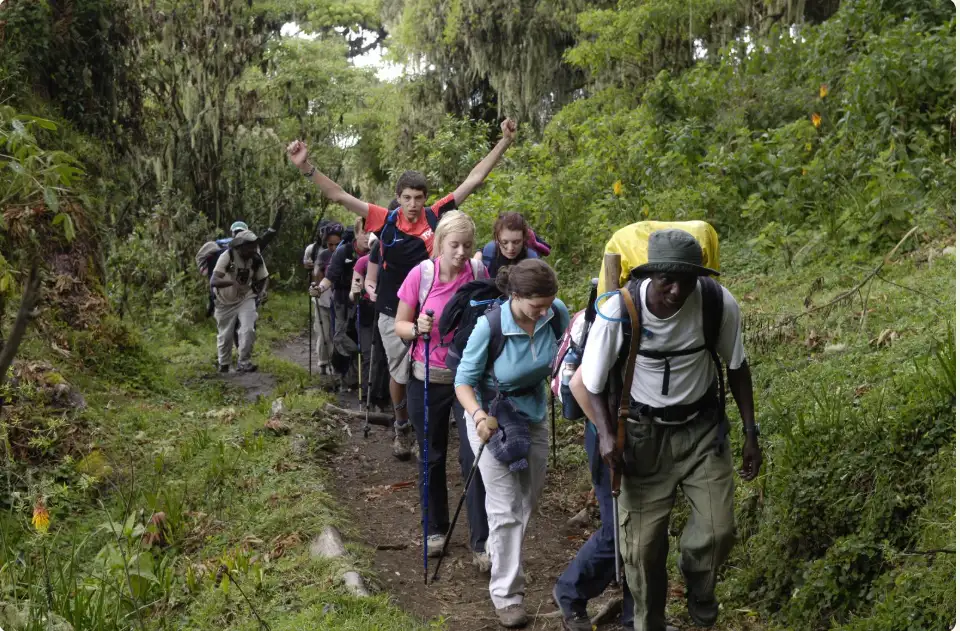
Begin your trek with registration at Momella Gate, where you’ll meet your guide, armed ranger, porters, and cook. The trail passes through a savanna where wildlife sightings are common, then climbs through lush rainforest. You’ll cross the Ngare Nanyuki River and may encounter buffalo, giraffes, zebras, and various monkey species.
Day 2: Miriakamba Hut to Saddle Hut
- Elevation: 2,514m to 3,570m
- Distance: Approximately 5km
- Time: 3-5 hours
- Terrain: Steep ascent through forest to moorland
Though shorter, this day involves significant elevation gain. The trail passes Elephant Ridge, offering magnificent crater views when weather permits. You’ll hike through the famous Fig Tree Arch and emerge onto open moorland. After reaching Saddle Hut, consider an acclimatization hike to Little Meru (3,820m) for phenomenal sunset views.
Day 3: Summit Day – Saddle Hut to Socialist Peak to Miriakamba Hut
- Elevation: 3,570m to 4,566m to 2,514m
- Distance: 5km ascent, then descent
- Time: 12-15 hours total
- Terrain: Steep rocky ascent, narrow ridge, alpine desert
Wake around 1:00-1:30 AM for a pre-dawn start at 2:00-2:30 AM. The route climbs steeply to Rhino Point (3,850m), featuring loose gravel and sheer drops requiring careful navigation. From Rhino Point, traverse the spectacular knife-edge crater rim—a narrow ridge with dramatic exposure on both sides—to reach Socialist Peak. Summit at sunrise for breathtaking views of the Ash Cone within the crater and Mount Kilimanjaro rising majestically to the east. After summit photos, descend to Saddle Hut for rest and food, then continue down to Miriakamba Hut.
Day 4: Miriakamba Hut to Momella Gate
- Elevation: 2,514m to 1,500m
- Distance: Approximately 10km
- Time: 2-5 hours
- Terrain: Descending through forest and grassland
Enjoy a relaxed descent through varied ecosystems, with opportunities to spot more wildlife. You can choose the direct route or take a detour to visit the Ash Cone. At Momella Gate, conclude your trek and tip your mountain crew.
3-Day Itinerary (For Experienced Trekkers)
The 3-day option condenses Days 3 and 4 into a single, extremely demanding day involving summit success followed by a full 3,000+ meter descent to Momella Gate. While this saves money, it’s not recommended due to:
- Insufficient acclimatization time
- Extreme physical demands (12-15+ hours of trekking)
- Brutal impact on knees during long descent
- Higher risk of altitude sickness
- Missing opportunities to appreciate the descent scenery
Difficulty and Physical Requirements
Fitness Level Needed
Mount Meru is classified as moderately to significantly challenging. While no technical climbing skills are required on the main route, climbers should possess:
- Good cardiovascular fitness
- Strong leg muscles for sustained uphill trekking
- Mental resilience for a long summit day
- Ability to hike 6-12 hours daily
Training Recommendations
Prepare for Mount Meru with:
- Cardiovascular training: Running, swimming, cycling sessions lasting 40+ minutes, 3-4 times weekly
- Strength training: Focus on legs, core, and back muscles
- Hiking practice: Long walks (5+ hours) on undulating terrain with loaded backpack
- Training duration: 8-12 weeks minimum before your trek
Altitude Considerations
At 4,566 meters, altitude sickness remains a significant concern. The rapid elevation gain (approximately 1,000 meters per day) makes proper acclimatization crucial. Common symptoms include:
- Headaches
- Nausea and vomiting
- Dizziness
- Difficulty sleeping
- Loss of appetite
The 4-day itinerary provides better acclimatization than the 3-day option. Despite the mountain being lower than Kilimanjaro, climbers must respect the altitude and ascend slowly.
Summit Day Challenges
The final push to Socialist Peak presents the trek’s greatest challenges:
- Starting between 1:00-2:00 AM in darkness and cold
- Steep, sustained climbing on loose gravel
- Narrow, exposed ridge sections with sheer drops
- Strong winds at higher elevations
- Temperature drops (can reach well below freezing)
- Thin air reduces physical performance
Choosing to ascend mount meru opens doors to breathtaking landscapes and unforgettable memories, making it a popular choice among climbers.
The experience on mount meru fosters a deeper appreciation for the great outdoors and the challenges of high-altitude trekking.
Best Time to Climb Mount Meru
Optimal Climbing Seasons
Dry Season (June to October)
- Clear skies and excellent visibility
- Cooler temperatures, especially June-September
- Best views of Mount Kilimanjaro
- Most popular climbing season
Hot Dry Season (December to February)
- Warmest temperatures
- Crystal-clear skies
- Spectacular summit sunrise views
- Second-best climbing window
Seasons to Avoid
Long Rainy Season (March to May)
- Heavy rainfall is making trails slippery and dangerous
- Poor visibility
- Increased difficulty and reduced safety
- Not recommended for climbing
Short Rainy Season (November)
- Intermittent rain showers
- Possible but less ideal conditions
- Better to choose dry season months
Costs and Budgeting
Typical Trek Costs
Mount Meru climbing costs range from $850 to $2,000 per person, depending on:
- Group size (larger groups reduce per-person costs)
- Trek duration (3-day vs 4-day)
- Tour operator quality and services
- Season and booking timing
What’s Included?
Reputable operators typically include:
- Tanzania National Parks Authority (TANAPA) fees: $450-$600
- Conservation fees: $59 USD per day
- Hut accommodation: $60 USD per night
- Rescue fees: $20 USD per person
- Armed ranger fees: $20 USD per group
- Licensed, experienced mountain guide
- Armed park ranger (mandatory)
- Porters to carry main luggage and equipment
- Professional cook
- All meals during the trek (breakfast, lunch, dinner)
- Treated and filtered drinking water
- Mountain hut accommodation
- Pre-trek briefing
- Airport transfers (from Kilimanjaro International Airport)
- Transport to/from Momella Gate
Additional Costs to Budget
- Tips for mountain crew: $150-$400 total
- Guide: $20-25 per day
- Cook: $15-20 per day
- Porters: $10-15 per day per porter
- Armed ranger: $15-20 per day
- Travel insurance (mandatory, including high-altitude coverage): $50-$200
- Gear rental (if needed): $20-$50 per day
- Personal equipment
- Accommodation before/after trek in Arusha or Moshi
- Meals not on the mountain
- Personal expenses and souvenirs
With the rise of mount meru as a premier trekking destination, it’s essential for climbers to prepare adequately for their adventure.
Adventurers often recount their journeys on mount meru, highlighting the camaraderie shared among climbers battling the elements.
Understanding the differences between mount meru and other peaks can help climbers make informed decisions about their trekking adventures.
The unique characteristics of mount meru set it apart from other climbing experiences, making it a must-visit for adventure seekers.
| Key Differences | Mount Meru | Mount Kilimanjaro |
|---|---|---|
| Height & Duration | 4,566m, 3–4 days | 5,895m, 5–9 days |
| Cost | $850–$2,000 | $2,000–$7,000 |
| Routes | One route (Momella) | Seven main routes |
| Wildlife | Abundant wildlife encounters daily | Minimal wildlife (mostly in forest zone) |
| Crowds | Significantly fewer climbers | Very popular, often crowded |
| Accommodation | Well-equipped mountain huts | Tents (except Marangu Route) |
| Difficulty | Steep, rapid ascent, technical sections | Gradual ascent, varies by route |
| Success Rates | 90–95% with preparation | 50–90% depending on route |
Choosing an Operator
Prioritize safety, guide experience, and ethical treatment of staff over finding the lowest price. Look for operators who:
- Are transparent about costs and inclusions
- Follow proper safety protocols
- Provide Wilderness First Responder-certified guides
- Are affiliated with Kilimanjaro Porters Assistance Project (KPAP)
- Pay fair wages to porters and crew
- Supply quality food and equipment
Mountain Huts and Accommodation
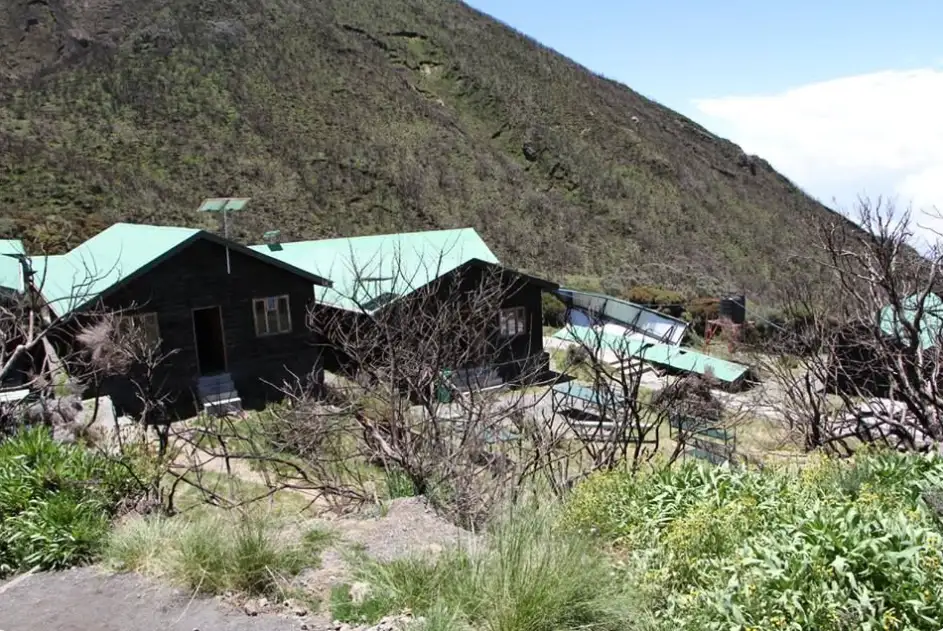
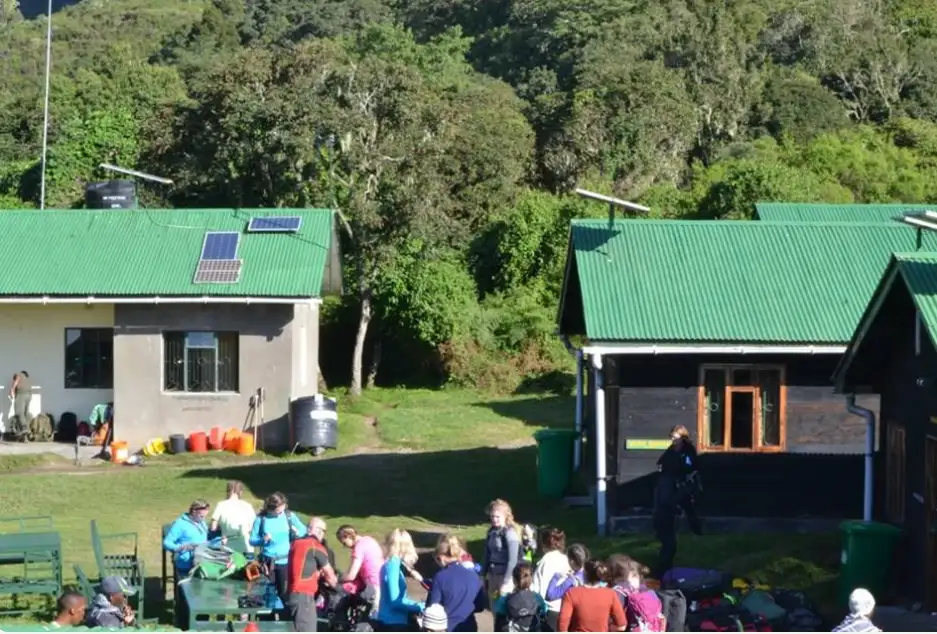
Miriakamba Hut (2,514m)
- Dormitory-style sleeping arrangements
- Bunk beds with mattresses (bring your own sleeping bag)
- Communal dining area
- Flush toilets
- Solar electricity
- Kitchen facilities for crew
- Sleeps 4 people per room
Saddle Hut (3,570m)
- Similar amenities to Miriakamba Hut
- Dormitory rooms with bunk beds
- Dining hall
- Basic toilet facilities
- Strategic location for summit attempt
- More exposed to wind and weather
What to Bring
Huts provide shelter and basic infrastructure but no bedding. Essential items include:
- Good quality sleeping bag (rated to -10°C/14°F)
- Sleeping pad for extra insulation
- Headlamp with extra batteries
- Personal toiletries
- Daypack for summit day
During the trek, the sights and sounds of mount meru create an immersive experience that climbers won’t soon forget.
Climbers looking for adventure will find mount meru provides a fulfilling challenge amidst stunning natural beauty.
Essential Gear and Packing List
Clothing Layers
Base Layers
- Moisture-wicking synthetic or merino wool shirts (2-3)
- Thermal underwear tops and bottoms
- Hiking pants (quick-dry material)
- Warm fleece or down jacket
- Waterproof, breathable rain jacket
- Waterproof rain pants
Summit Day Additions
- Insulated down jacket
- Insulated pants
- Balaclava or warm hat covering ears
- Neck gaiter or buff
- Warm gloves (liner plus insulated)
Footwear
- Sturdy, broken-in hiking boots (waterproof, ankle support)
- Camp shoes/sandals for hut use
- Moisture-wicking hiking socks (3-4 pairs)
- Warm sleeping socks
Equipment
- Waterproof duffel bag for porter-carried items (15-20kg limit)
- Daypack (30-40L) for personal items during hiking
- Sleeping bag (-10°C/14°F rating)
- Trekking poles (highly recommended for stability)
- Water bottles or hydration system (3L capacity total)
- Headlamp with extra batteries
- Sunglasses (UV protection)
- Sun hat with brim
- Camera and extra batteries
- Power bank for electronics
Personal Items
- Sunscreen (SPF 50+)
- Lip balm with SPF
- Personal medications
- Altitude sickness medication (consult doctor)
- Basic first aid supplies
- Toiletries (biodegradable soap, toothbrush, etc.)
- Hand sanitizer
- Toilet paper
- Personal snacks (energy bars, nuts, dried fruit)
Optional Gear Rental
Most operators in Arusha offer gear rental if you prefer not to travel with bulky equipment:
- Sleeping bags
- Trekking poles
- Down jackets
- Backpacks
- Headlamps
Rental costs typically range from $20-$50 per day per item.
Safety and Health Considerations
Mandatory Requirements
Tanzania law requires all Mount Meru climbers to use:
- Licensed mountain guide
- Armed park ranger (for wildlife protection)
- Proper permits from TANAPA
Independent climbing is not permitted.
Altitude Sickness Prevention
To minimize altitude sickness risks:
- Choose the 4-day itinerary for better acclimatization
- Ascend slowly and steadily
- Stay well-hydrated (3-4 liters daily)
- Avoid alcohol and smoking
- Eat regularly even without appetite
- Communicate openly with your guide about symptoms
- Consider acclimatization hike to Little Meru
- Listen to your body and descend if symptoms worsen
Medical Considerations
Before your trek:
- Get a medical check-up
- Consult your doctor about altitude sickness medication (Diamox)
- Ensure your travel insurance covers high-altitude trekking to 5,000 meters
- Update routine vaccinations
- Consider vaccinations for yellow fever, typhoid, hepatitis A
Wildlife Safety
The armed ranger’s primary role is ensuring your safety around potentially dangerous animals:
- Buffalo: Unpredictable and can be aggressive
- Elephants: Keep respectful distance
- Leopards: Rarely seen but present
- Maintain distance from all wildlife
- Follow ranger’s instructions immediately
- No sudden movements or loud noises
- Stay with your group
Various terrains await those who decide to conquer mount meru, each presenting different challenges and rewards along the way.
Preparation for mount meru involves not only physical training but also understanding the mountain’s unique ecosystem.
Combining Mount Meru with Mount Kilimanjaro
The Perfect Combo Trek
Climbing both mountains offers several advantages:
- Significantly improved acclimatization for Kilimanjaro
- Near-certain summit success on Kilimanjaro
- Two distinct trekking experiences
- Better value for time spent in Tanzania
- Experience both wildlife-rich and barren high-altitude environments
Recommended Timing
Option 1: Rest Day Between Mountains
- Mount Meru (4 days)
- 1-2 rest days in Arusha or Moshi
- Mount Kilimanjaro (7-9 days)
- Total: 12-15 days
Option 2: Back-to-Back Climbing
- Mount Meru (4 days)
- Immediate transfer to Kilimanjaro start
- Mount Kilimanjaro (7-9 days)
- Total: 11-13 days
Most experienced guides recommend the rest day option for optimal recovery, though many successfully complete back-to-back climbs. The first few days on Kilimanjaro are relatively easy, allowing recovery while gaining altitude.
Success Rate Improvement
Climbers who complete Mount Meru before Kilimanjaro report:
- Minimal altitude sickness on Kilimanjaro
- Better physical and mental preparation
- Confidence from Mount Meru success
- Understanding of multi-day high-altitude trekking
- Familiarity with Tanzanian mountain crews and systems
Pre and Post-Trek Accommodation
Where to Stay in Arusha
Luxury Options
- Gran Melia Arusha: 5-star luxury with Mount Meru views
- Arusha Coffee Lodge: Boutique luxury in coffee plantation
- Mount Meru Hotel: Central location with excellent facilities
Mid-Range Options
- Tulia Boutique Hotel & Spa: Great value with pool and quality rooms
- Planet Lodge: Comfortable, good restaurant
- Arusha Serena Hotel: Reliable chain hotel
Budget Options
- Wakawaka Hostel: Cheap, great location, social atmosphere
- Outpost Lodge: Backpacker favorite
- Masai Camp: Budget-friendly with camping options
Where to Stay in Moshi
Mid-Range to Luxury
- Pink Flamingo Hotel: Family-run boutique hotel, 5 minutes from town
- Bristol Cottages: Comfortable rooms, beautiful gardens
- Kilimanjaro Crane Hotel: Mountain views, central location
Budget Options
- Keys Hotel: Basic but clean and affordable
- Lamama Hotel: Popular with trekkers
- Prime land
Most climbers stay at least one night before and one night after their trek.
Environmental Responsibility
Leave No Trace Principles
As Mount Meru lies within Arusha National Park, a protected conservation area:
- Pack out all trash
- Stay on marked trails
- No picking plants or disturbing wildlife
- Use biodegradable soap away from water sources
- Follow hut rules for waste disposal
- Respect wildlife viewing distances
- Support conservation fees through proper permits
Cultural Sensitivity
- Treat local guides, porters, and rangers with respect
- Tip appropriately (major income source)
- Learn basic Swahili greetings
- Understand local customs
- Support ethical operators paying fair wages
- Ask permission before photographing people
Ultimately, those who take on mount meru will find themselves enriched by the journey and the natural beauty that surrounds them.