
Types of Antelopes in Serengeti
The Serengeti National Park spans more than 14,750 square kilometers and is home to 300 mammal species. The park is renowned for its large herds of plains animals, including sixteen different types of antelope that inhabit various parts of this magnificent ecosystem.
From the massive wildebeest and eland to the tiny dik-dik and klipspringer, this region showcases an incredible diversity of antelope species. Each has evolved unique characteristics and behaviors that allow them to thrive in different parts of the Serengeti.
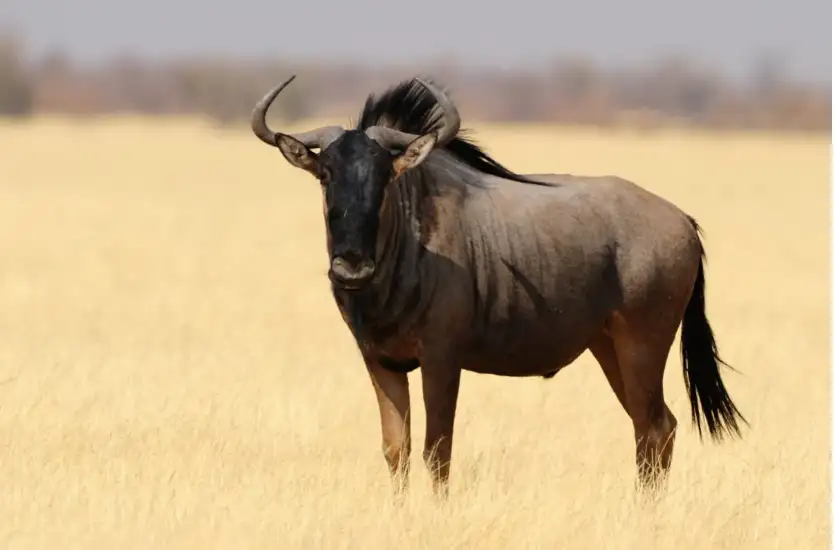
Wildebeest (Gnu)
Wildebeest are perhaps the most famous antelope of the Serengeti, also known as gnu, blue wildebeest, or brindled gnu. These large herbivores are most celebrated for their participation in the Great Migration, where millions of animals move in a massive circular pattern following food and water sources.
These impressive antelope have a long rectangular head and a distinctive mane that extends down the ridge of their back. Both males and females possess long curved horns, though males are typically larger with slightly darker coats. Their coloration ranges from slate gray to dark brown depending on the subspecies.
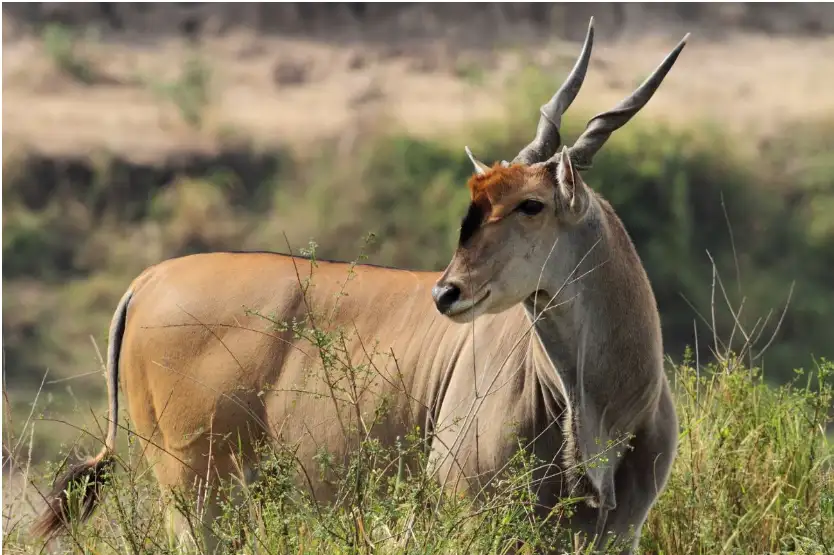
Eland
The eland is one of the largest antelope species, weighing up to 2,000 pounds with a shoulder height of around 4.9 feet. Males tend to be considerably bigger than females. Their most distinguishing features are their beautiful spiral horns and the prominent black stripe running down the center of their backs.
Eland have dewlaps under their necks that help with thermoregulation in arid climates. They are known as "track on track" walkers, meaning their rear foot lands exactly where the front foot was placed, minimizing noise while moving through the bush. These impressive animals can jump over three meters in height.
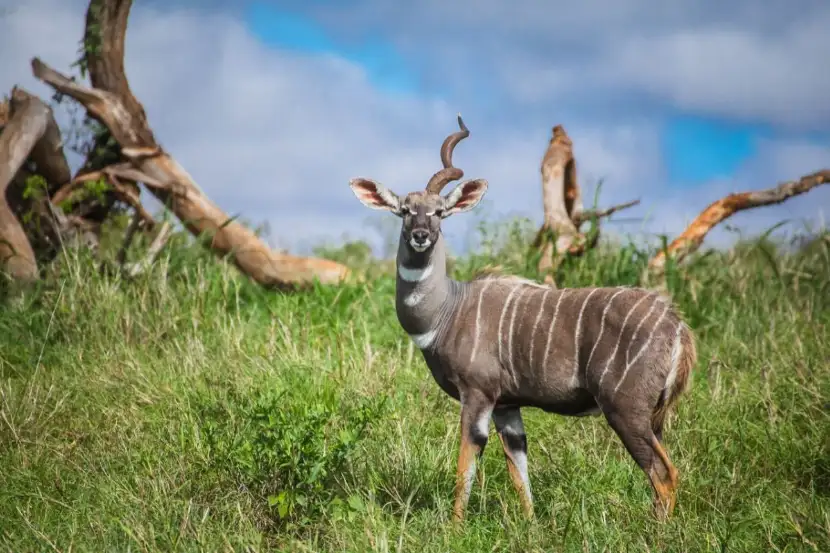
Lesser Kudu
This striking creature is quite easy to identify, though challenging to spot due to their shy nature and preference for thick vegetation. Males have impressive spiral horns and are typically larger than females. Their bodies are adorned with thin white stripes across their torsos and down their backs, with two thicker white stripes on the throat and neck.
Males sport a dark brown coat while females are more reddish brown. To distinguish them from the greater kudu, look for the orange tinge on the legs and horns of the lesser kudu. They spend most of their time in the forests of the southwestern Serengeti.
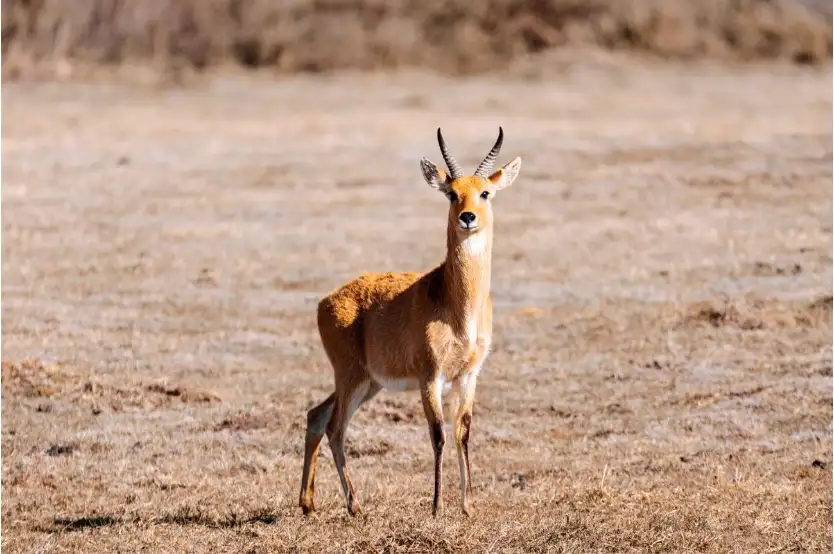
Bohor Reedbuck
Commonly spotted near water sources, Bohor reedbuck are medium-sized antelope with long limbs that typically hide in tall grass. Rams have stouter necks and builds than females and possess small, forward-facing horns, while females have none.
Their coat is yellow to grayish brown with white undersides, and they have a distinctive dark stripe on the front of each foreleg. Males weigh between 100-133 lbs while females are smaller at 77-100 lbs. These predominantly nocturnal animals prefer to graze at night in small groups or pairs.
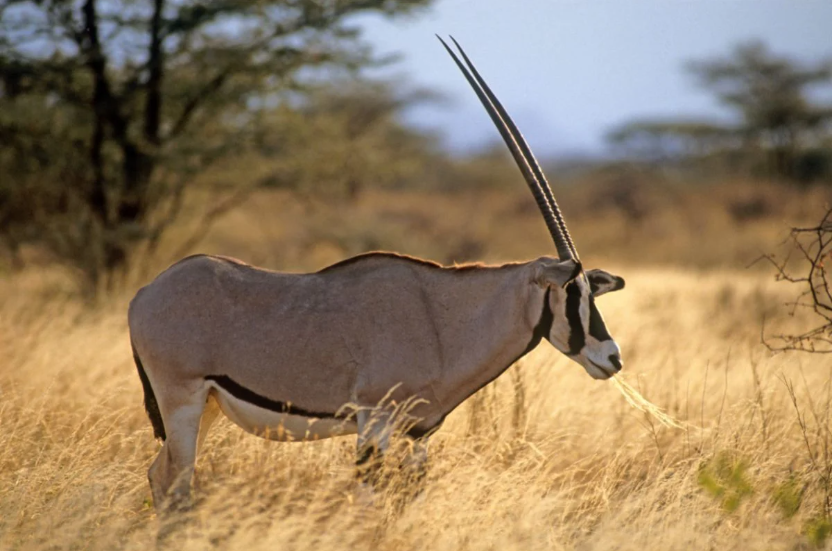
East African Oryx (Beisa)
The fringe-eared oryx, found in the Serengeti, is a threatened species with declining populations. This very distinctive antelope is fawn in color with black bands and white stripes on its face. A black line on the body marks where the fawn color transitions to a white underbelly.
Males and females appear similar, both sporting long, straight horns with a distinctive ringed appearance. These territorial animals use their impressive speed as a primary defense mechanism against predators. Unfortunately, they've been illegally hunted by those who mistakenly believe their blood and flesh can cure illnesses.
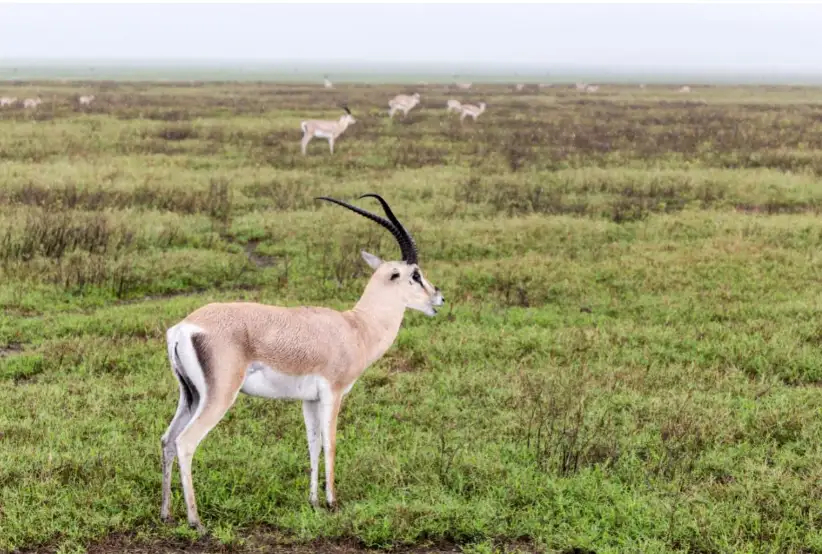
Grant's Gazelle
This beautiful antelope is often confused with the more widely known Thomson's gazelle, but Grant's gazelle is larger and lacks the black stripe on its side. They have a distinctive white patch on the tail that extends up their back.
These gazelles live in large herds and participate in the Great Migration each year. Remarkably, they can go long periods without water by raising their body temperature to reduce sweating, thereby conserving water. Both males and females have lyre-shaped horns with a ringed appearance, measuring between 18-30 inches in length.
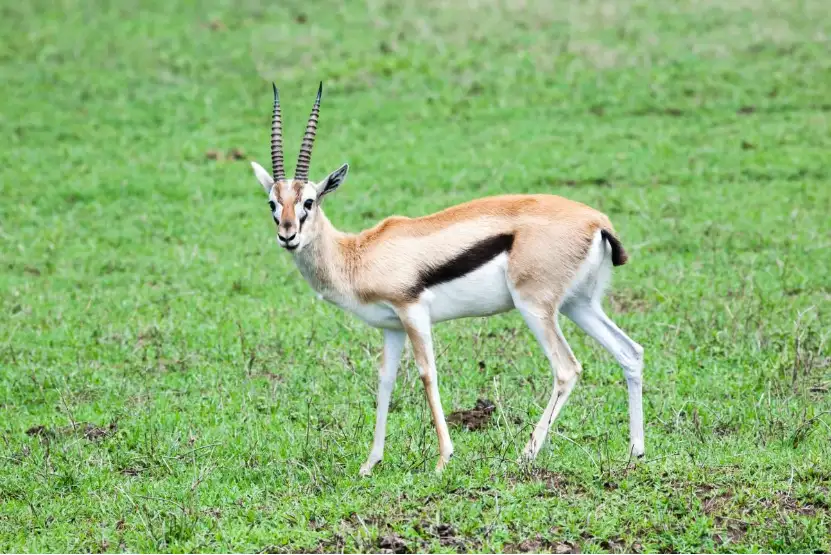
Thomson's Gazelle
One of the better-known antelopes of the Serengeti, Thomson's gazelle is smaller than its counterpart, the Grant's gazelle, and has a distinctive lateral stripe on its abdomen. There are two subspecies, with the Serengeti variety having a whiter face and a black stripe from the inner eye to the mouth.
With an estimated 500,000 gazelles in the Serengeti (both Thomson's and Grant's combined), they are the second most numerous antelope in the park after wildebeest. Female Thomson's gazelles have shorter horns than males and give birth to a single calf after a 6-month gestation period.
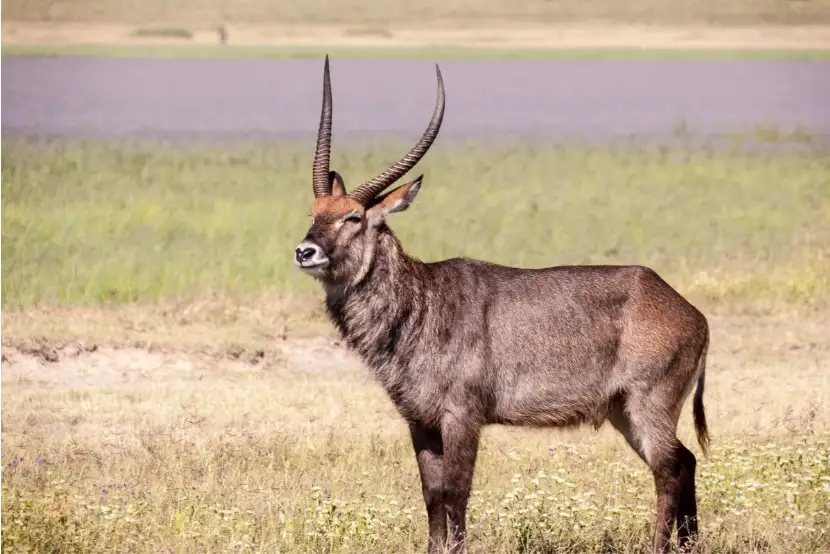
Waterbuck
As their name suggests, waterbuck stay close to water sources and require a good supply of grass. They inhabit specific regions of the Serengeti, such as the woodlands in the central part of the park. These antelope are easily identified by their long, shaggy hair on the neck and distinctive white ring on their rump.
Their coat features a water-repellent layer thanks to an oil coating. Males possess long, sweeping horns that are faintly ringed and can reach up to 40 inches in length. Interestingly, waterbuck are not common prey for large predators, possibly due to their thick coat, and are typically only attacked by very hungry lions.
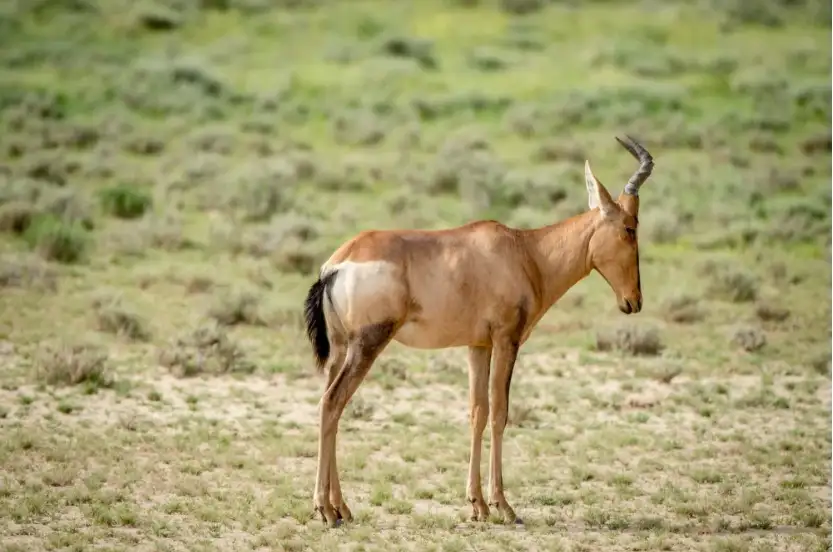
Hartebeest (Kongoni)
Also known as kongoni or kaama, hartebeests are surprisingly elegant despite their large size and ungainly appearance. They're one of the fastest antelope, capable of reaching 43 miles per hour. These animals are easily recognizable by their long faces, steeply sloping backs, and wide sweeping horns.
Their name translates to "tough ox," and they certainly are resilient animals. Hartebeests are not picky eaters and will consume whatever is available. They stand around 3-5 feet at the shoulder and weigh between 165-440 pounds. These social animals live in organized herds that can exceed 300 individuals.
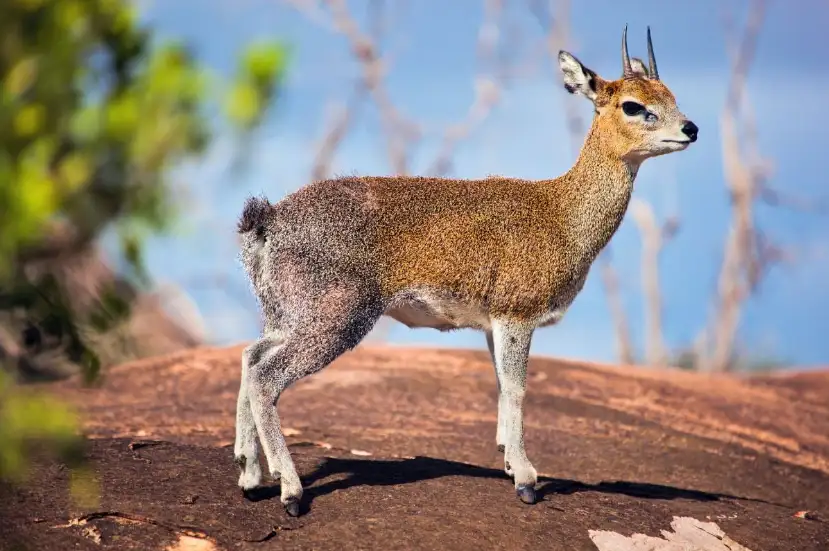
Klipspringer
These small antelope are adorable, and their behavior and cute appearance endear them to most visitors. Despite their fragile appearance, these are hardy animals that live in mountainous areas of the Serengeti, often in extreme temperatures.
Klipspringers eat a wide variety of grass and plants from which they derive most of their water requirements. Like other dwarf antelope, they form monogamous pairs and defend their territory together. Males are particularly vigilant, standing guard for extended periods to protect the pair's territory and young while the female tends to their single calf.
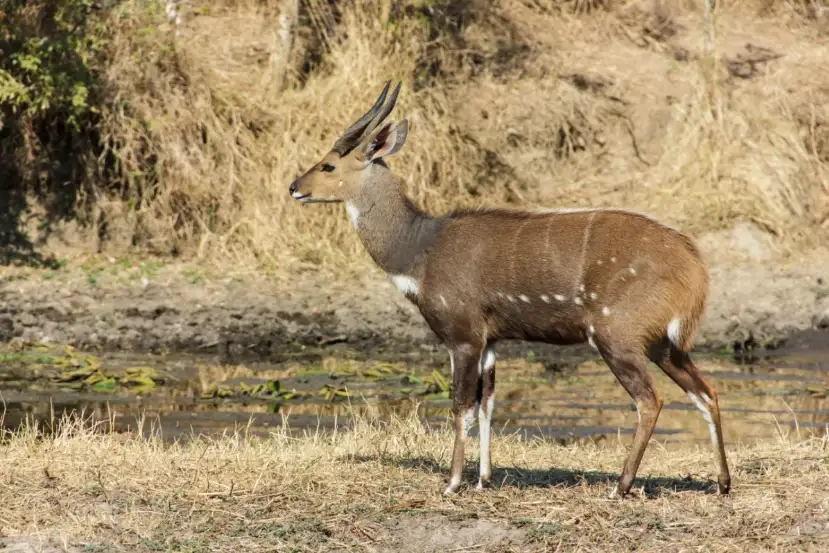
Bushbuck
The bushbuck is an elusive and shy antelope that spends most of its time in thick vegetation. However, it has white patches on its ears, legs, tail, chin, and neck, which are the most mobile parts of its body, so you may catch a glimpse if you're lucky.
Males have large spiral horns between 10-20 inches long and are not territorial. They are very solitary animals. Females lack horns and have distinctly different coloring - while the male's coat is dark gray, the female's is reddish brown with more white spots across the body.
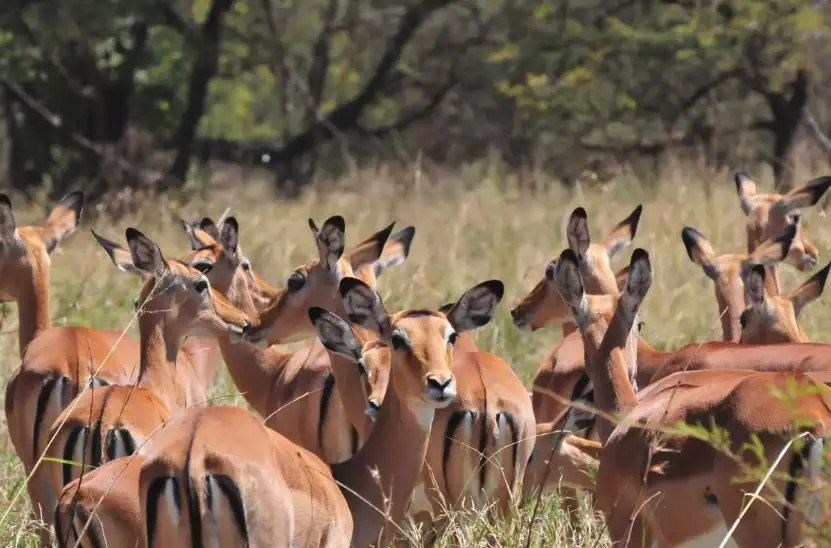
Impala
Impala are another well-known antelope from the Serengeti and one of the most abundant. These mid-sized antelope are very graceful with an easily recognizable face featuring a white spot above their eyes and a black stripe down the middle of their tail.
Males have lyre-shaped horns with a distinctive ringed appearance, while females have no horns. Impala are extremely fast runners and agile jumpers, using both abilities to evade predators. They stand 28-36 inches at the shoulder and weigh 88-165 pounds. These social animals move in breeding herds with a territorial male shepherding the females.
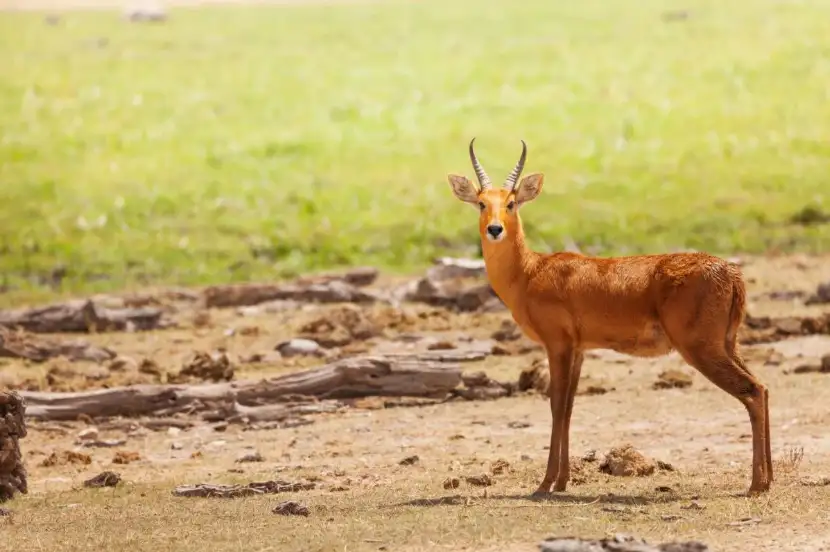
Oribi
In the northern parts of the Serengeti, you'll find the oribi, a small slender antelope with reddish brown fur and a white underside. It can be easily identified by the dark spot or sweat gland under its ears.
Male oribis have small, sharp horns that are completely straight; females do not have horns. They're actually a type of dwarf antelope with a long neck and long legs, giving them an almost gazelle-like appearance. These antelope have the lowest distribution across the Serengeti, so spotting one is quite fortunate.
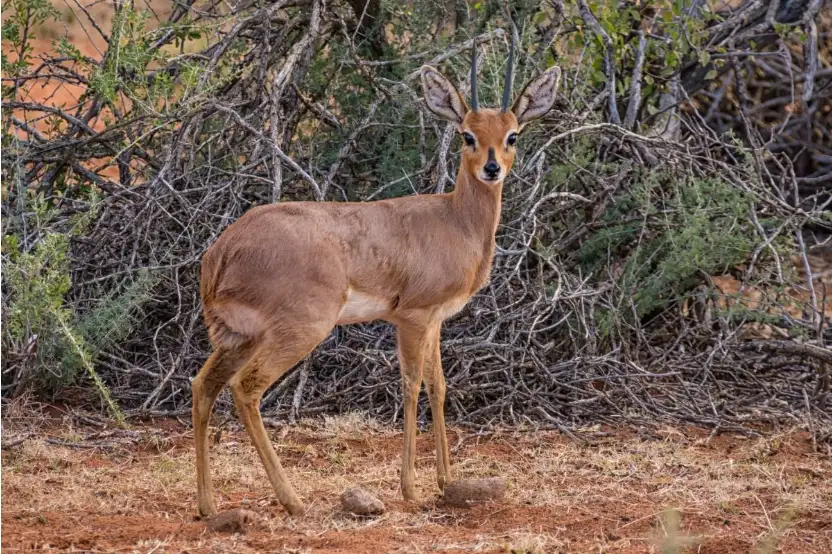
Steenbok
Steenboks are small antelope found in the woodlands of the southwestern Serengeti and some parts of the north. They are extremely pretty with large eyes and ears. Their coat is fawn colored with an orange tinge, and they have a distinctive teardrop-shaped black patch above their nose.
These antelope feed on young plants, foliage, and leaves and can wander far from water sources. When threatened, steenboks run in a zig-zag pattern to confuse or throw off pursuers. Male steenbok have menacingly sharp horns while females have none but are larger than males.
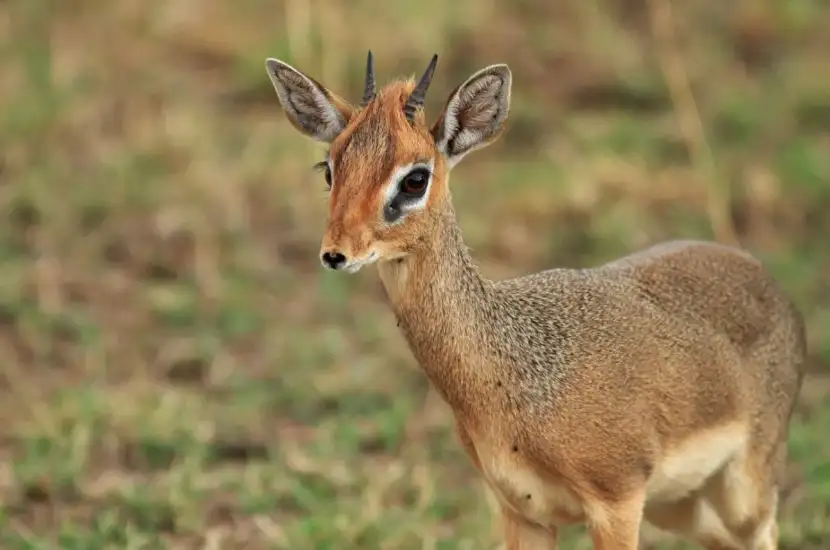
Dik-Dik
These dainty little antelope are very cute and widespread across the Serengeti. They're normally found in thick vegetation where they may be hard to see due to their size. In fact, at only 12-16 inches high, they're the smallest antelope in the Serengeti.
Dik-dik are fairly sedentary but can run up to 26 miles per hour when needed. When a predator approaches, the female's alarm call is a "dik-dik" sound, giving them their name. These monogamous animals mate for life. Males have small horns often concealed by the small tuft of hair on their head. Their large eyes are surrounded by a ring of white fur with a scent-marking gland below each eye.
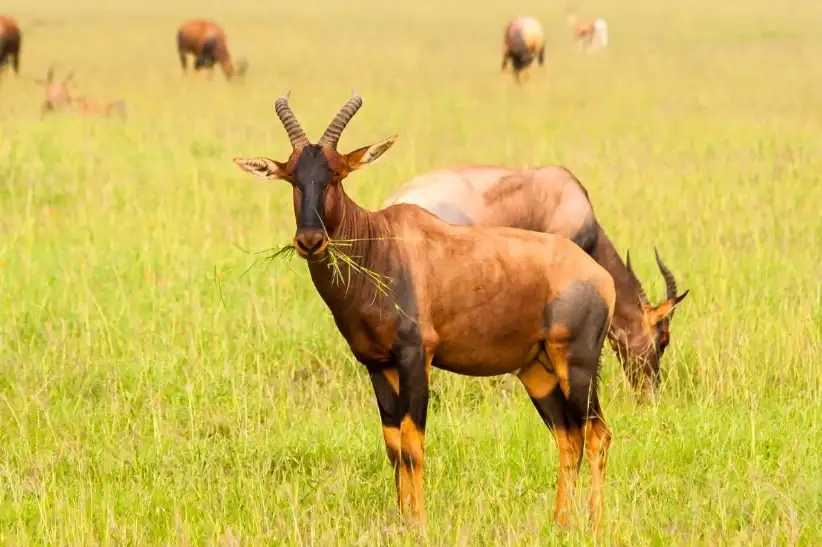
Topi
Topi bear a striking resemblance to hartebeest, as they belong to the same sub-family. They both have short necks, long legs, and long faces, but the topi is darker on the top of the legs. Medium in size, the topi has a reddish brown coat.
These are very social antelope seen in great numbers on the plains of the eastern Serengeti. Males shepherd groups of females, but their social organization is quite flexible. Similarly flexible are their breeding habits - normally calving once a year, but if food is plentiful, they'll calve more frequently. Females can even delay labor if they sense danger.
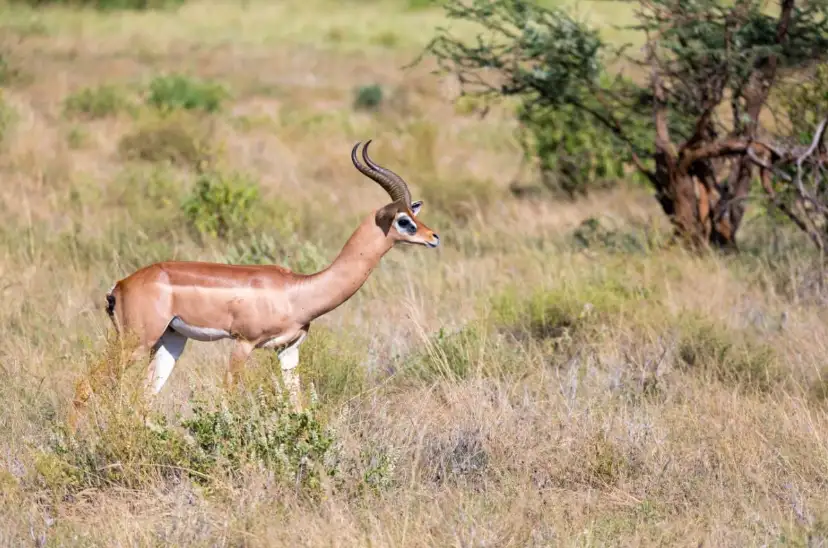
Gerenuk (Giraffe Gazelle)
The gerenuk is a tall, elegant antelope that closely resembles a gazelle with its long, slender neck and limbs. These features explain why it's also called the giraffe gazelle. A flat wedge-shaped head and large, round eyes add to the beauty of this graceful creature.
Males stand approximately 35-41 inches tall while females are slightly shorter at 31-39 inches. In terms of coloration, the gerenuk has a reddish brown back and lighter, fawn to buff colored flanks. The insides of the legs and underside of the belly are cream colored, and the eyes and mouth are surrounded by white fur. Mainly active during the day, gerenuk may be spotted shading from the noon sun or feeding on foliage.